You understand your patterns intellectually. You’ve done the therapy, you see the cycles, yet the feeling of being stuck remains. This gap between what your mind knows and what your body holds is where a retreat becomes essential. It’s the space for your body to finally catch up. Knowing what to expect at a wellness retreat for women is about understanding its purpose: to create a safe container where your nervous system can finally soften. Your system isn’t broken; it’s been brave. This is a chance to lay down the armor of performed strength and be witnessed, allowing for deep, embodied integration that talk therapy alone often cannot reach.
Key Takeaways
- A Retreat is a Homecoming, Not a Fix: A somatic retreat is an invitation to stop performing strength and come home to your body. It’s not about adding more information, but about creating the conditions for your nervous system to enter a state of Rest and Request™, allowing the shift from Type A to Type Be.
- The Container Creates the Conditions for Safety: The power of a women-only retreat lies in the shared container. This intentional space creates a coherent field where your nervous system can finally feel safe enough to soften, allowing the profound medicine of being witnessed to do its work.
- Integration is the Art of Tending to Your System: The real work begins after the retreat by integrating the experience into your daily life. This means creating small, consistent anchors of somatic practice to honor your body’s new awareness and remind your brave nervous system that safety is now available to it.
What Is a Women’s Wellness Retreat, Really?
Let’s be honest, the term “wellness retreat” can feel a little vague. It might bring to mind images of green juice, silent meditation, or maybe just a fancy spa day. And while some of that might be included, a true women’s retreat, especially one grounded in somatic work, is something else entirely. It’s not about escaping your life; it’s about coming home to your body. It is a dedicated time and space to quiet the noise of the outside world so you can finally hear the wisdom that has been living inside you all along. These retreats are designed to be a safe and supportive container where women can rest, feel, and reconnect with themselves on a profound level. It’s less about adding more information and more about creating the conditions for your own innate healing intelligence to emerge. This is a space where your nervous system isn’t seen as broken, but as brave. It’s an invitation to move from the constant doing of “Type A” to the gentle presence of “Type Be.” This isn’t a personality change; it’s a homecoming. The goal is not to fix you, because you are not broken. The goal is to create a coherent field, a shared space of regulation where your body can finally enter a state of Rest and Request™. This allows for deep integration and lasting change that ripples out into your life long after you’ve returned home.
Looking to book your retreat? This guide breaks down exactly what happens during a women’s retreat so you feel prepared.
- If you are ready to browse specific locations and pricing, see our directory of 6 Emotional Wellness Retreats for Deeper Healing.
- If you prefer 1-on-1 support before attending a group retreat, learn how to book a session for trauma healing with a private guide.
Beyond a Vacation: The Real Difference
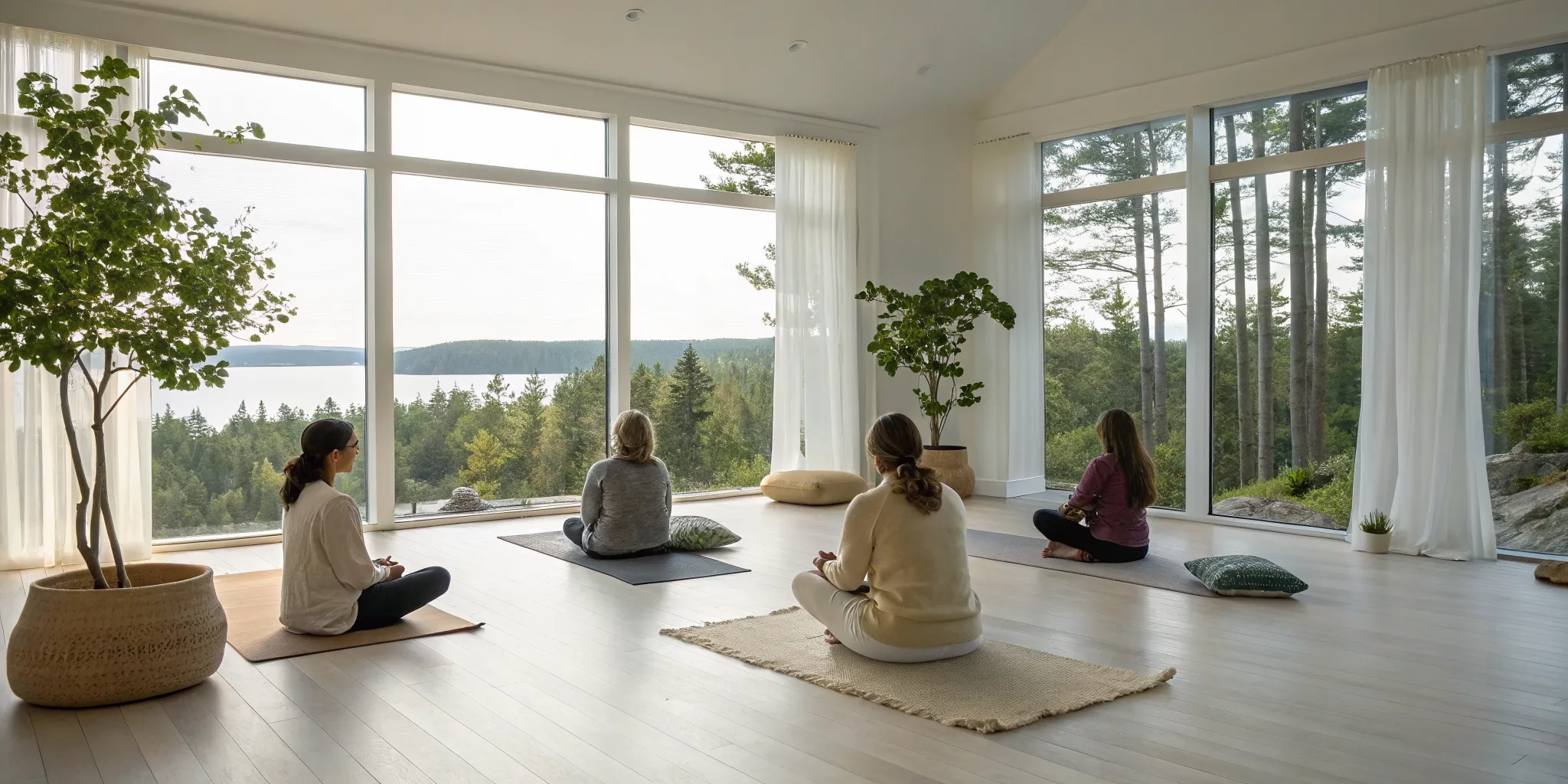
A vacation is often about distraction, a temporary break from the pressures of daily life. A retreat, however, is about attention. It’s an intentional turning inward. While a vacation might leave you feeling rested for a few days, a somatic retreat aims to help you truly reset your body and mind in a way that creates a new baseline of regulation. It’s the difference between putting a bandage on a wound and learning the language of the wound itself, understanding what it needs to heal from the inside out. Often held in quiet, natural settings, these spaces allow you to step away from your roles and responsibilities, giving your body the permission slip it needs to finally exhale and be still.
Is This Kind of Retreat for You?
If you’ve been the strong one for a long time, if you’ve read all the books and done the therapy but still feel a disconnect between what your mind knows and what your body feels, this kind of retreat is for you. It’s for the woman who is tired of performing strength and is ready to feel her own. A retreat offers a rare opportunity to explore feelings without judgment and be witnessed by other women who get it. It’s a space to begin untangling generational patterns held in the body and to remember that your sensitivity is a superpower, not a flaw. This is for you if you’re ready to stop searching for answers outside of yourself and start listening to what your body has always known.
Let’s Clear the Air: Common Retreat Myths
Before you can give yourself this gift, your mind may put up some familiar walls. Let’s gently move through the most common ones.
- “It’s only for women in crisis.” A somatic retreat is not an emergency room. It’s for the woman who feels a quiet pull toward something more — not just the one who has hit rock bottom.
- “You need experience in yoga or meditation.” No prior practice is needed. These are not performance-based classes. You are invited to show up exactly as you are, a beginner, a skeptic, or somewhere in between.
- “You’ll leave a completely different person.” The goal is not transformation into someone new — it’s a homecoming to who you have always been. You’ll leave as more of yourself, with a regulated nervous system as your new foundation.
If you’re feeling anxious about attending alone, know that most women arrive solo. That feeling at the threshold? It’s a signal, not a stop sign.
The Rhythm of a Retreat: What to Expect
A retreat is not a vacation, and it’s certainly not another self-improvement project to add to your list. It is a dedicated space to intentionally step out of the demanding rhythm of your daily life and into the quiet, intelligent rhythm of your own body. For so many of us, life operates at a pace that requires a kind of performed strength, a constant forward motion that leaves our nervous systems quietly screaming for rest. The rhythm of a retreat is the antidote. It is a structure designed for depth, not demand; a gentle current to float in, not a schedule to conquer. The days are intentionally paced to allow your nervous system to soften, to let the noise of the world fall away so you can finally hear what your body has always known. Healing Home’s somatic retreat and healing space is designed to hold this kind of transformative experience.
This intentional pacing is a form of medicine. It creates a container where you can finally stop doing and simply be. Each part of the day, from the silent mornings to the shared practices, acts as a tuning fork. It helps your own system remember its natural frequency of calm and presence. As each person in the sacred community begins to settle, we create a more coherent field together, a powerful ripple effect of regulation that makes individual work feel safer and more possible. This is an invitation to a homecoming, a chance to un-learn the urgency and remember the wisdom of a slower, more embodied pace. The entire experience is one of the core somatic services we offer, designed to guide you from wound to wisdom.
Morning: Grounding and Arrival
Mornings on retreat are for quiet arrival. Instead of an alarm clock and a rush of to-dos, you are invited to begin the day with intention and presence. This might look like a silent walking meditation as the sun rises, a gentle stretching practice to awaken the body, or simply savoring a cup of tea without distraction. The purpose is to anchor you in the present moment and in your physical self, creating a regulated foundation for the day’s deeper work. This isn’t about starting the day productively; it’s about starting it from a place of groundedness. It’s a practice of coming home to your body before you engage with anything or anyone else, honoring the Earth element of our elemental arc.
Daytime: Somatic Work and Shared Practice
The heart of the day is dedicated to shared practice and somatic exploration. This is where we move from the Earth element of arrival into the Fire of awakening and the Water of feeling. Through guided somatic meditations, gentle movement, and reflective journaling, you are invited to connect with the stories held in your body. In the sacred community of the group, you have the opportunity to be witnessed without judgment. These are not classes to perfect or workshops to conquer. They are invitations to explore your inner landscape within a safe container, like the one we cultivate at our Wounds to Wisdom retreat. The focus is always on what feels true for you, moment to moment, allowing your body’s wisdom to lead the way.
In-Between: The Gift of Rest and Integration
Just as important as the structured sessions is the space in between. This is the gift of unstructured time for rest and integration. For many of us, especially high-functioning women, this can be the most challenging and most rewarding part of the experience. You might feel called to nap, walk in nature, sit by the water, or simply be still. This is the practice of Rest and Request™, allowing your nervous system to process and integrate the work you’re doing. You have full permission to listen to your body and honor its needs, whether that means joining an activity or choosing solitude. This is where the shift from Type A to Type Be truly begins to land, as you can read more about on our blog.
Practices That Create Real Shifts
A true wellness retreat isn’t about adding more information to your already full mind. You’ve likely read the books and listened to the podcasts. You understand the concepts intellectually, yet the old patterns persist. That’s because lasting change isn’t a thought process; it’s an embodied experience. The practices you’ll find at a body-centered retreat are designed to move you out of your head and into the feeling, sensing truth of your body. This is where the real shifts happen.
These practices are invitations, not assignments. They are opportunities to meet yourself with curiosity and compassion, creating the conditions for your system’s innate wisdom to come forward. It’s less about learning something new and more about remembering what your body has always known. We don’t aim to “fix” anything, because your nervous system isn’t broken, it’s been brave. Instead, we create a safe container for it to finally rest, release, and recalibrate. The following practices are pillars of this homecoming, each one a different doorway into the landscape of your inner world.
Body-Based Practices: Yoga, Breath, and Movement
This isn’t about achieving the perfect yoga pose or pushing through a strenuous workout. Body-based practices in a retreat setting are a gentle conversation with your physical self. Through slow, mindful movement and conscious breathing, you begin to listen to the subtle signals your body is always sending. It’s an opportunity to notice where you hold tension, where you feel spacious, and how it feels to simply be present in your own skin.
These practices help to regulate the nervous system, gently guiding it from a state of high alert into one of safety and ease. Your nervous system is a tuning fork, and through intentional breath and movement, you can help it find its most resonant, coherent frequency. You can explore some of these somatic meditations to feel the difference for yourself.
Witnessed Sharing: The Power of the Circle
For so many of us who have been “the strong one,” our stories have lived silently inside our own bodies. A women’s circle offers a rare and sacred space to be seen and heard without judgment, advice, or interruption. This practice of being witnessed is profoundly healing. It dismantles the illusion of isolation and reminds us that our experiences, while unique, are part of a shared human tapestry.
When one woman speaks her truth in a held container, it creates a ripple effect, giving others permission to access their own. This isn’t group therapy; it is the ancient practice of women gathering to create a coherent field of presence and support. It’s a core element of our Wounds to Wisdom retreat, where the collective energy becomes a powerful vessel for individual healing.
Creative and Natural Expression
Sometimes, what we need to express has no words. Practices like journaling, intuitive drawing, or creating with natural elements offer a channel for the parts of you that exist beyond language. The goal is never to create a masterpiece, but to allow your inner world to take a tangible form. It’s a way to bypass the analytical mind and connect directly with the feelings and images living in your subconscious.
This form of expression is a powerful tool for self-discovery, providing a mirror to your own inner landscape. It’s a way to give a voice to grief, joy, anger, and longing without needing to explain or justify any of it. You can find more ways to connect with your body’s wisdom on our blog.
Somatic Meditation for Nervous System Regulation
Unlike traditional meditation that may focus on clearing the mind, somatic meditation invites you to drop your awareness down into your body. It is the foundational practice for nervous system regulation. Through guided sensory awareness, you learn to track sensations without judgment, building your capacity to stay present with whatever arises. This is how you move from the chronic stress of fight-or-flight into the deeply restorative state of Rest and Request™.
This is the core of the Healing Home Method™. By consistently practicing somatic meditation, you are not fixing a broken system. You are tending to a brave one, teaching it, breath by breath, that it is finally safe to soften. This regulation is the prerequisite for everything else, creating a stable ground from which all other growth can happen.
Why a Women-Only Space? The Unique Benefits
There is a unique quality to a space held exclusively for women. It’s not about exclusion, but about intention. Creating a container without the presence of masculine energy, societal expectations, or the familiar dynamics of mixed company offers a different kind of permission. For many of us who have spent a lifetime performing strength or defaulting to a fawn response, this specific environment allows the nervous system to register a profound level of safety. It’s in this safety that the armor can soften, the breath can deepen, and the real work of returning to yourself can begin.
Nervous System Co-Regulation in a Held Container
Your nervous system is a tuning fork, constantly sensing and responding to the frequencies around it. When you enter a room of women committed to the same deep, quiet work, a powerful coherent field is created. This is co-regulation in practice. Without the need to manage, perform, or anticipate, your body can finally receive the signal that it’s safe to stand down. This shared state of calm allows your system to gently move toward its natural state of Rest and Request™, where true restoration happens. It’s a felt sense of belonging that goes beyond words, creating a foundation for profound change.
The Medicine of Being Witnessed
So many of us have carried our stories in silence, believing our experiences were ours to hold alone. A women-only retreat space offers the medicine of being witnessed without judgment, advice, or fixing. When you share your truth in a circle of women, you often find your story reflected in their eyes. This shared recognition dissolves the illusion of separation and breaks the generational patterns that taught us to hide our pain. Being seen in your vulnerability is a sacred act, a core part of the Wounds to Wisdom process that allows you to reclaim the dignity of your own experience.
When the Body Finally Catches Up to the Mind
You’ve read the books. You’ve done the thinking. You understand your patterns intellectually, yet they persist. A retreat gives you the one thing your daily life cannot: an interruption of the status quo. By stepping away from endless to-do lists and obligations, you create the quiet space for your body’s wisdom to finally catch up to your mind’s awareness. This is the essence of the shift from Type A to Type Be. It’s not a personality change, but a homecoming. You stop trying to figure it all out and instead create the conditions for your body to lead, because as we explore on our blog, the body always knows the way home.
How to Pack: What to Bring and What to Leave Behind
Packing for a retreat is a ritual. It is the first tangible step you take toward the threshold of your experience. This isn’t about creating a perfect checklist; it’s about making a conscious choice about what you need to feel held, comfortable, and present in your own body. Think of your suitcase as a small, sacred container you are preparing for yourself.
As you gather your items, hold the intention of your time away. What do you hope to welcome in? What are you willing to set down, even just for a few days? The most important part of packing is often deciding what to leave behind. This act of intentional release creates the very space you are seeking. It’s a physical declaration that you are ready to receive something new, that you are making room for your own homecoming.
Comfortable Clothing for Movement and Stillness
Your body will be doing deep work, even in moments of quiet. Pack clothes that honor this. Think of soft fabrics, comfortable waistbands, and layers you can add or remove as your body temperature shifts. Bring pieces that allow you to move freely during somatic practices and also wrap you in comfort during periods of deep rest. This isn’t about performance or appearance; it’s about sensation. Choose the yoga pants that feel like a second skin, the sweater that feels like a hug, the socks that help you feel grounded on the earth. Your clothing is a partner in this process, offering your body a tangible sense of safety and ease. This is your permission slip to be utterly, completely comfortable.
Tools for Reflection: Journals and Personal Items
Bring a journal and a pen that feels good in your hand. This is not for taking copious notes or capturing every word spoken, but for creating a private space to witness yourself. It’s a place for the stray thought that arises during meditation, the image that comes to you in a dream, or the feeling that finally has the space to surface. Your journal is a companion for the quiet, in-between moments. You might also consider bringing a small, personal item to place in your room or on an altar, something that anchors you to your intention. A smooth stone, a photograph, or a piece of jewelry can serve as a simple, physical reminder of why you came and what your body has always known. You can explore our meditations to begin this practice of inner listening even before you arrive.
An Invitation to Leave Work and Worry at Home
The most profound thing you can leave behind is the pressure to perform. This is a direct invitation to the part of you that manages, organizes, and optimizes. Leave the laptop, the work phone, and the endless to-do lists at home. Resisting the urge to be “productive” is a radical act of devotion to your own nervous system. This is your time to shift from Type A to Type Be. It’s an opportunity to let your body drop into a state of Rest and Request™, where true restoration can finally begin. By intentionally creating this boundary, you give yourself the greatest gift of all: the uncluttered space to simply be with yourself, without an agenda.
How to Show Up: For Yourself and the Group
For many of us, especially women who are used to holding it all together, a new environment can trigger an old impulse: the need to perform, to get it “right.” A retreat is an invitation to lay that impulse down. How you show up is not about following a set of rules, but about offering yourself and the group the gift of your authentic presence. Before you arrive, take a quiet moment to set a soft intention — not a goal to achieve, but a simple question to hold: What am I open to feeling here? The way you care for your own nervous system has a ripple effect, contributing to the safety and depth of the entire container.
When one person in a room settles into their body, it gives others permission to do the same. This is how we create a coherent field together, a shared space where our nervous systems can communicate and co-regulate without a single word being spoken. Think of these guidelines not as expectations to meet, but as invitations into a practice. This is your permission slip to receive, to be held, and to let your body finally catch up to your mind, knowing you are supported by a circle of women doing the same.
Arrive Open, Not Optimized
The part of you that makes detailed plans and color-coded spreadsheets is a gift, but you can let her rest for a few days. The goal of a retreat is not to be the “best” at relaxing or to have the most cinematic breakthrough. The goal is to simply arrive. Arrive in your body, in the room, in the moment. This is a space to be messy, tired, quiet, or joyful, without any pressure to perform. It’s a core practice in the homecoming from Type A to Type Be. Instead of trying to optimize your experience, can you meet each moment with open curiosity? This is your chance to be present with what is, trusting that is more than enough.
Protect the Container: Phones, Privacy, and Presence
The retreat space is a sacred container, built on a foundation of trust and mutual respect. A vital part of honoring this container is disconnecting from the outside world. We ask that you leave your phone and other devices in your room during all shared activities. This isn’t a rule for the sake of rules; it is a profound act of care for your own nervous system and for every woman in the circle. Unplugging allows your body to settle out of its constant state of alert and truly land in the present. It also protects the privacy of others, creating the safety required for the vulnerable, witnessed sharing that is central to this work.
Hold Space, Don’t Fix
Many of us have been conditioned to be the fixer, the advisor, the problem-solver. In this space, you are invited to practice something far more powerful: holding space. When another woman shares her story, your role is not to offer advice or try to fix her pain. Your role is to listen with your whole body and offer your compassionate presence as a form of witness. This practice is rooted in the deep trust that the body knows the way home. By simply witnessing another’s experience without judgment, you offer the profound medicine of being seen, communicating, “You are not alone, and what you feel is real.”
Respect the Shared Rhythm of the Group
A retreat is intentionally designed with a rhythm, an elemental arc that guides the group through a process of arrival, expression, and integration. Honoring this shared rhythm by being on time for sessions is an act of collective care. It helps build a predictable and safe environment where every woman’s nervous system can begin to soften and settle. Your presence contributes to the group’s coherent field. Arriving on time is a simple, non-verbal way of communicating to the circle, “I am here. I see you. We are in this together.” This shared commitment is part of what makes the deep work of our Wounds to Wisdom retreat so potent.
Choosing the Right Retreat for You
Choosing a retreat is a sacred act of commitment to yourself. It’s a declaration that you are ready for something more than information; you are ready for integration. For the woman who has tried it all, read all the books, and is tired of the self-help hamster wheel, this decision requires deep discernment. It’s not about finding a perfect escape, but about finding the right container, a space held with integrity where your body can finally feel safe enough to do its work. The right retreat is not a vacation. It is a homecoming.
This is a threshold, and you get to choose who you walk across it with. The goal is not to find someone to fix you, because your nervous system isn’t broken, it’s been brave. The goal is to find a guide and a community that can witness you as you remember what your body has always known. It’s about finding a space that honors the rhythm of your own self-healing intelligence.
Stories from the Other Side: What Participants Share
When choosing a retreat, it helps to hear from women who have already walked through the doors. The most common sentiment shared by first-time attendees isn’t about dramatic breakthroughs—it is about quiet relief.
One recent participant shared, “I feel like I’m in my own skin for the first time in years. I didn’t realize how much energy it took to perform strength until I was given permission to put it down.” Another noted, “I finally remembered how to take a full breath.”
These stories highlight the true goal of a somatic retreat: nervous system regulation.
How to Choose Your Container
When vetting a retreat, look beyond the beautiful photos. Ask yourself:
- Location: Does your body crave the grounding of a forest, or the expansive release of the ocean?
- Group Size: Do you need the anonymity of a large group, or the intimate safety of a small circle?
- The Guide: Does the facilitator speak from a place of lived experience, or purely from a textbook? You want a guide who has turned their own wounds to wisdom.
Questions to Ask the Facilitator (and Yourself)
Before you commit your time, energy, and resources, grant yourself a moment of quiet inquiry. This is not a test to be passed, but an invitation to listen to your own inner wisdom. The body knows what it needs.
First, turn inward. Place a hand on your heart and a hand on your belly. Ask: What does my body truly need to feel safe? What does it need to finally let go? Is it stillness, movement, silence, or the sound of the ocean? Getting clear on what you need to feel connected and grounded is the first step.
Then, turn your questions to the facilitator. Ask about their direct, lived experience with the work they teach. Ask about the size of the group and the structure of the days. Is there spaciousness for rest and integration, or is the schedule packed from dawn to dusk? A worthy guide will welcome these questions, understanding that your clarity is part of the process.
Red Flags vs. Green Lights
As you explore your options, your body will give you signals. A red flag might feel like a tightening in your gut; a green light might feel like a quiet expansion in your chest. Trust these signals.
Red flags often look like promises of a quick fix or a total transformation in a few days. Be wary of language that focuses only on mindset without acknowledging the body’s role. A facilitator who presents as an untouchable guru, rather than a fellow human, cannot create the safety required for true vulnerability.
Green lights feel different. They feel like permission. Look for facilitators who offer expert help and who have clearly done their own work. A green light is a schedule that intentionally weaves in periods of deep rest, honoring the nervous system’s need for the Rest and Request™ state. The focus should be on providing you with tangible, body-based practices that you can carry home with you, creating a ripple effect in your daily life.
An Invitation to Our Wounds to Wisdom Retreat
If your body is longing for a truly held, dignity-forward space to do this work, I want to extend a personal invitation. Our Wounds to Wisdom retreat is an intimate container designed for women in transition who are ready to move from Type A to Type Be. It is not a vacation; it is a deep dive into the somatic practices of the Healing Home Method™.
We gather in a small group to create a uniquely coherent field, where the medicine of being witnessed can do its work. Here, in a safe and supportive place, we honor the body as the primary seat of transformation. We move, we breathe, we rest, and we allow the wisdom that lives in the wound to finally come forward. This is a space for the woman who has been the strong one for so long and is ready to finally be held. It is an invitation to come home to yourself.
Bringing the Retreat Home: The Art of Integration
The car ride home from a retreat is a sacred, silent space. You return to a life that looks the same, yet you feel fundamentally different. The world feels a little softer, your breath a little deeper. This is the threshold where the real work begins: integration. It’s the gentle, often unglamorous art of weaving the peace of the retreat into the fabric of your daily life. It’s not about holding onto a fleeting feeling, but allowing the shifts you experienced to take root in the soil of your reality. This process is how a weekend of deep rest becomes a lifetime of deeper connection to yourself.
Integration is the bridge between the person you were in that held, sacred container and the person you are becoming in your everyday world. It acknowledges that real change doesn’t happen in a flash of insight; it happens in the small, consistent moments that follow. It’s about honoring the new awareness in your body without demanding that your life immediately rearrange itself to match. This is the quiet, steady work that turns a powerful experience into lasting, embodied change. It’s the difference between a memory and a new way of being.
What Integration Really Means (and What It Isn’t)
Integration is the body’s process of making the retreat experience its new normal. It’s your nervous system learning it can feel safe, settled, and spacious even when you aren’t in a protected container. It isn’t a checklist of new tasks or an attempt to perform the calm you felt on day three. It’s a quiet homecoming. It’s permission to feel clunky as you navigate old environments with a new internal awareness. Remember, your nervous system isn’t broken—it’s been brave. Integration is simply giving it the time and space to understand that the safety and rest it just experienced are available to it now, always.
How to Continue the Practice in Your Daily Life
To continue the practice is not to replicate the retreat, but to honor its echo. You can create small, potent anchors in your day. Perhaps it’s the first three breaths you take in the morning, consciously dropping your shoulders. Maybe it’s a five-minute somatic meditation from the Healing Home Method™ before you open your email. The goal is to offer your body consistent, gentle reminders of the regulation it now knows is possible. Think of it less as a discipline and more as a devotion. You are tending to the new capacity for aliveness you cultivated, allowing the body to remember its way home, one small moment at a time.
Related Articles
- Somatic Healing Coach for Women | Healing Home
- About a Nervous System Healing Coach | Healing Home
- Nervous System Regulation Techniques for Women | Healing Home
- Spiritual alignment, somatic healing, and self-awareness
- Nervous System Healing: A Guide to Calm and Inner Balance
Frequently Asked Questions
How is a somatic retreat different from therapy? While therapy is an invaluable tool that often focuses on understanding your story from the mind down, a somatic retreat works from the body up. Many of us intellectually understand our patterns but still feel stuck in them. This work bridges that gap. Instead of talking about feelings, we create the conditions for you to feel them safely in your body. The goal isn’t analysis; it’s regulation. We focus on creating a state of Rest and Request™, allowing your body’s own wisdom to lead the way to integration, which is a very different and complementary process to traditional talk therapy.
I’m an introvert and nervous about group sharing. Will I be forced to participate? Your presence is your participation, and you will never be forced to share. This is a common and important question. The retreat container is built on permission and respect for each person’s rhythm. For many, the most profound healing comes from simply being in the coherent field of the group and witnessing others, which can be done in total silence. If and when you do feel called to speak, the practice is simply to be heard, not to perform or tell a perfect story. Your nervous system’s safety is the first priority, always.
What if I’m not flexible or experienced with yoga and meditation? This work has nothing to do with being flexible or having a quiet mind. The body-based practices we explore are invitations, not fitness classes. The focus is entirely on your internal experience, not what it looks like on the outside. We use gentle movement and somatic meditation as tools to connect with the body’s sensations and build your capacity for presence. This is a space for you to come as you are, whether you’ve been meditating for years or are just learning to be still for the first time.
I’m worried the calm feeling will disappear once I’m back in my real life. How do you support integration? This is the most important part of the work. A retreat is not a temporary escape; it is a place to learn a new way of being that you take home with you. The entire experience is designed to give you tangible, body-based tools that become yours forever. Integration begins the moment you arrive, as you learn to listen to your body’s cues. The goal is not to perfectly preserve a “retreat feeling,” but to have a new, regulated baseline to return to, creating a ripple effect of calm and presence in your daily life.
Why is a women-only space so important for this kind of work? A women-only container offers a unique kind of safety that allows the nervous system to downshift in a profound way. For many of us who have been conditioned to perform strength or manage the energy in a room, this space removes that unconscious labor. It creates a powerful coherent field where our bodies can co-regulate and feel a deep sense of belonging. In this specific environment, the medicine of being witnessed by other women can unfold, allowing for a vulnerability and honesty that is the foundation for a true homecoming.