
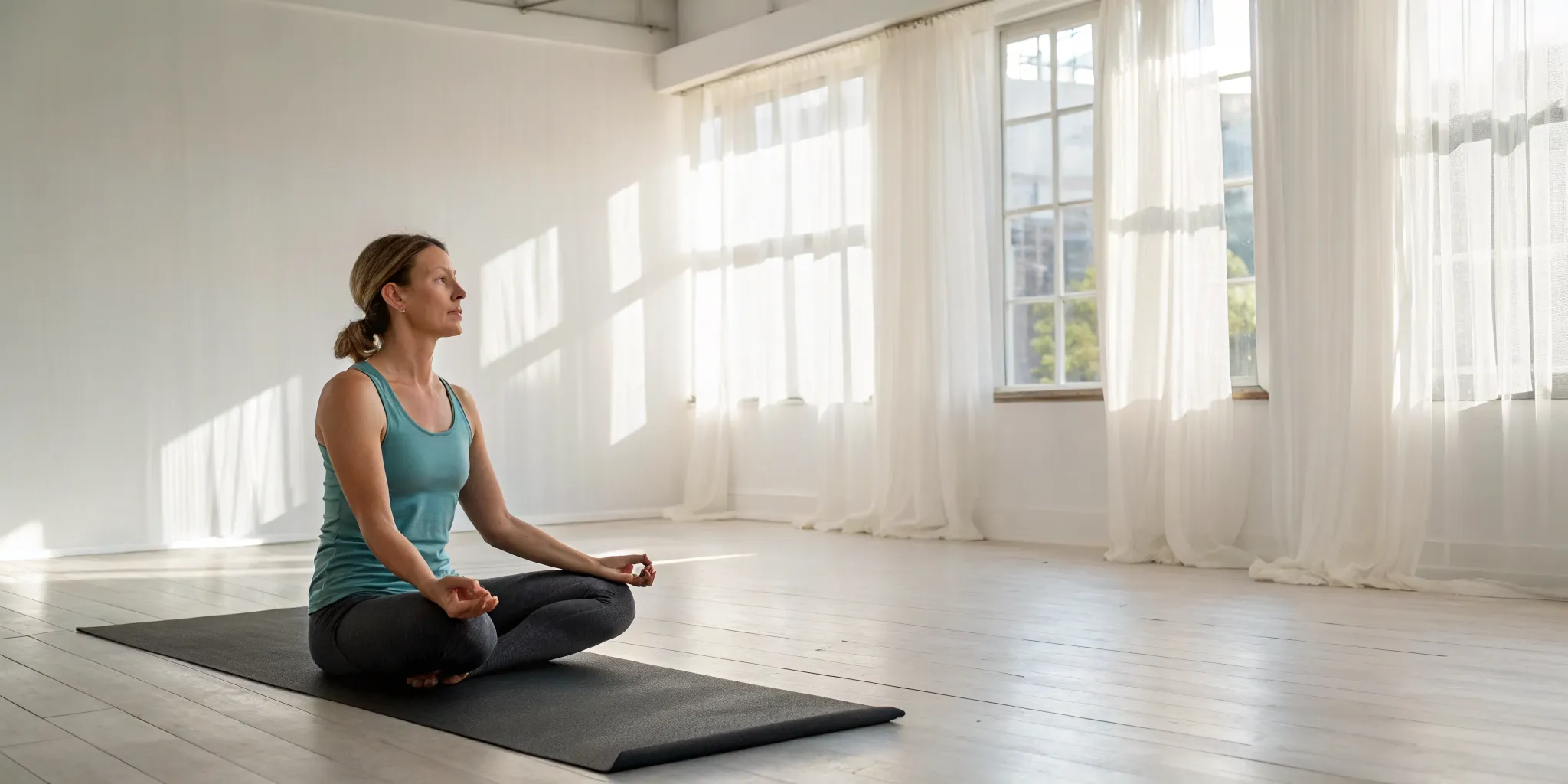
Sometimes the patterns that keep you stuck feel older and deeper than your own life story. You might recognize a familiar anxiety that your mother held, or a sense of responsibility that doesn’t feel entirely yours. This is because our bodies can carry the echoes of our ancestors’ unresolved experiences. While you can’t talk your way out of these inherited burdens, you can feel your way through them. Somatic exercises for trauma release provide a direct path to meet these generational patterns where they live: in your physiology. This is profound work for the cycle-breaker, offering a way to gently release what was never yours to carry and create a new legacy of regulation and safety.
Key Takeaways
- Your body holds the wisdom, not just the wound: Somatic work operates from the bottom up, inviting you to connect with physical sensation before intellectual understanding. This “body first, insight second” approach allows you to gently release stored stress without needing to relive the story.
- Gentle consistency is the foundation for safety: Lasting change comes from small, repeated moments of connection, not intense effort. Honoring your body’s pace and pausing when needed is the practice itself, rebuilding trust with your nervous system one moment at a time.
- One regulated adult creates a more coherent field: Your personal practice is a gift to everyone around you. By tending to your own nervous system, you not only find your way home to yourself but also help break generational patterns, creating a legacy of safety for your family and community.
What Are Somatic Exercises for Trauma Release?
Somatic exercises are an invitation to come home to your body. If you’ve spent years trying to think your way out of pain, anxiety, or exhaustion, this is a fundamentally different path. Instead of starting with the story in your mind, we begin with the sensations held in your body. These practices help you connect with your body’s innate wisdom to gently release stored tension and calm your nervous system. It’s not about forcing a release or pushing through discomfort. It’s about learning to listen to what your body has always known.
This body-first approach recognizes that trauma and chronic stress aren’t just mental events; they are physical experiences that shape our entire being. Somatic therapy focuses on how these experiences live within your physiology, often beneath the level of conscious thought. Through gentle movement, breath, and focused attention, you learn to track your internal landscape with curiosity instead of judgment. This process allows the body to complete protective responses that may have gotten stuck long ago, creating a pathway for genuine, lasting change. It’s a shift from being a Type A achiever, always performing strength, to a Type Be human, present and grounded in your own skin. This is not about fixing something that is broken; it is about remembering the wholeness that is already here.
What is the Body-Trauma Connection?
When we experience something overwhelming, our bodies react instinctively to protect us. But sometimes, that protective energy doesn’t get a chance to resolve and release. It remains held in our tissues as chronic muscle tension, shallow breathing, or a persistent feeling of being on high alert. This is what it means for trauma to be “stuck” in the body. It’s not a personal failing or a sign of weakness. It’s simply an intelligent survival response that hasn’t yet found its completion. The body remembers what the mind might try to forget.
Your Nervous System as an Internal Tuning Fork
Think of your nervous system as a tuning fork, constantly sensing and responding to the world around it. It has a “gas pedal” (the sympathetic state) for action and stress, and a “brake pedal” (the parasympathetic state) for rest and digestion. When we’re holding unresolved trauma, it’s like the gas pedal is stuck on. Somatic exercises help you learn to gently apply the brake, guiding your system back into a state of Rest and Request™. By paying close attention to your physical sensations, you can gradually expand your capacity to be with what is, healing without becoming overwhelmed.
How Do Somatic Exercises Release Stored Trauma?
Somatic exercises work by speaking the body’s native language: sensation. When we experience something overwhelming, the event may end, but the body often keeps the score. The energy of that survival response (fight, flight, or freeze) can get stored in our tissues, creating patterns of tension, anxiety, or numbness that persist for years. Talk therapy can help us understand the story, but it doesn’t always reach the physical imprint of the experience.
This is where somatic work offers a different path. Instead of starting with the mind, we begin with the body. These gentle, body-based practices are not about forcing a release or reliving a memory. They are an invitation to listen to what your body has been holding. By creating a safe container for you to notice sensation, you allow your nervous system to gently discharge stored stress and complete the biological responses that were interrupted long ago. It’s a process of remembering the body’s innate capacity for self-healing.
Why Body-Based Healing Works
Your body is an intelligent, self-healing system. It has always known how to find its way back to balance. However, trauma can interrupt these natural cycles, leaving stress stuck in the body as chronic muscle tension, shallow breathing, or a constant feeling of being on alert. Body-based healing works because it bypasses the thinking mind and communicates directly with the nervous system through sensation and movement.
Somatic exercises create the conditions for your body to release this stored tension and finally feel safe. By focusing on physical sensations in the present moment, you give your body a chance to process and integrate old experiences without being overwhelmed. This is the essence of a bottom-up approach: we tend to the body first, and from that place of groundedness, new insights and emotional clarity can arise naturally.
Move from Survival Mode to Rest and Request™
When your nervous system is shaped by trauma, it can get stuck in survival mode. You might live with a baseline of anxiety (fight or flight), feel disconnected and numb (freeze), or constantly people-please to keep the peace (fawn). These are not character flaws; they are brilliant survival strategies. The goal of somatic work is not to get rid of these responses but to help your body understand that the original threat is over.
This is the homecoming to what I call Rest and Request™. It’s the parasympathetic state where your body can finally digest, heal, and feel safe enough to recognize its own needs. Somatic exercises are the bridge that helps your body release this stored-up stress and complete the protective responses it couldn’t at the time. It’s a gentle return to your natural state of regulation and ease.
Your Nervous System Isn’t Broken—It’s Been Brave
Let’s be clear about one thing: your nervous system isn’t broken. It’s been brave. Every pattern you hold, whether it’s hypervigilance or shutdown, was a necessary adaptation to keep you safe in an unsafe environment. The body did exactly what it needed to do to survive. The challenge is that it can get stuck in that protective pattern, using the “gas pedal” (your sympathetic nervous system) far more than the “brake pedal” (your parasympathetic).
Somatic exercises help you regain access to your own internal braking system. They are a way of gently re-teaching your body that it’s safe to slow down and that you can shift between states with more ease. This isn’t about forcing calm. It’s about honoring the wisdom of your body’s responses while expanding your capacity to feel alive, present, and safe in your own skin.
How Are Somatic Exercises Different from Talk Therapy?
If you’ve spent years in talk therapy, you may be brilliant at explaining why you feel the way you do. You can name the patterns, trace the history, and understand the dynamics at play. Yet, the feeling in your body persists: the tight chest, the clenched jaw, the hum of anxiety that never quite shuts off. This is the gap where somatic work lives. While talk therapy works from the top down, starting with the thinking mind to influence the body, somatic exercises work from the bottom up. They begin with the body to create change in the mind.
This isn’t about dismissing the incredible value of therapy. Instead, it’s about adding a vital, often-missing piece. For many of us, especially high-functioning women who are used to performing strength, we can talk about our trauma without ever truly touching the place where it’s stored. We can analyze the story, but the body holds the score. Somatic work offers a different doorway in. It invites you to bypass the analytical mind and communicate directly with your nervous system in its own language: the language of sensation. It’s a homecoming from “Type A” to “Type Be,” where change happens not through more thinking, but through embodied feeling.
Body First, Insight Second
The core principle of a somatic approach is “body first, insight second.” Instead of trying to think your way out of a feeling, you are invited to feel your way into a new way of being. Somatic exercises involve the body in healing; they help you connect with your body’s sensations to release stored tension and calm your nervous system. The goal isn’t to immediately understand why your shoulder is tense, but simply to notice the tension with gentle awareness. By bringing your attention to physical sensations, you create the conditions for your body’s self-healing intelligence to do its work. The insights often arrive later, not as a product of mental effort, but as a natural result of a more regulated state.
Access What Words Cannot Reach
Some of our deepest experiences, especially those from early in life or tied to generational patterns, are stored without words. Trauma gets “stuck” in the body, and as therapist Linda Kocieniewski notes, “Talking about it often isn’t enough to release these physical feelings.” When an event is too overwhelming, the body holds onto the stress as muscle tension, shallow breathing, or a constant feeling of alarm. Somatic exercises provide a way to access and process this stored energy directly. They give you a way to speak with the parts of you that have been holding on for so long, offering release without needing to construct a perfect narrative. The body knows the way through.
Process Without Re-Living the Memory
A common fear when approaching trauma work is that you’ll have to relive painful experiences. Somatic work offers a profoundly gentle and dignity-forward alternative. Unlike therapies that may require you to recount traumatic memories in detail, the somatic approach focuses on the physical sensations happening in the present moment. As research into Somatic Experiencing shows, the body can process these experiences slowly and safely without direct re-living of the event. You learn to track your sensations and gently discharge small, manageable amounts of stored survival energy. This allows you to expand your capacity for aliveness safely, honoring your body’s pacing and wisdom every step of the way.
Signs You Might Benefit from Somatic Release
Your body is always communicating with you, even when your mind is busy making plans and taking care of everyone else. Sometimes, the most profound messages aren’t spoken in words but are felt as sensations, tensions, or persistent emotional patterns. Recognizing these signals is the first step toward a homecoming to yourself. If you feel like you’ve tried everything to create change but still feel stuck, it might be because the conversation needs to happen with your body first. Somatic work isn’t about learning another new theory; it’s an invitation to listen more deeply to what your body has always known. It’s a permission slip to honor the physical language of your experience, recognizing that true integration happens when the body feels safe enough to release what it has been holding. These signs are not indicators that you are broken; they are the brave communications of a system that has worked tirelessly to keep you safe. The body holds the score of our lived experiences, and when we learn to listen to its cues, we open a direct path to regulation and release. This is especially true for women in transition, who often carry the weight of past roles, relationships, and responsibilities deep within their tissues. You might be navigating a divorce, an empty nest, or a career pivot, and find that your body is holding onto the stress of it all. Below are a few invitations to notice if your body is asking for a different kind of attention, a different path toward wholeness.
Physical Cues Your Body Is Holding Trauma
The body keeps a faithful record of our lives. When experiences are too much, too fast, or too soon, the body holds that energy as a protective measure. This can show up as chronic muscle tension in your shoulders, a perpetually tight jaw, or shallow breathing that never seems to fill your lungs. You might notice unexplained digestive issues, persistent fatigue, or a subtle, constant feeling of being braced for impact. These are not signs of weakness; they are signals from a nervous system that has been incredibly brave. Emotional trauma can manifest in the body as physical discomfort, and somatic release offers a gentle way to let that stored energy complete its cycle and find its way out.
Emotional Patterns That Keep You Stuck
Do you feel like you’re running on an internal motor that won’t switch off? Or maybe you feel the opposite: a sense of numbness, disconnection, or an inability to move forward on things that matter to you. These states can be expressions of a nervous system stuck in a survival response. You might recognize patterns of hypervigilance (fight or flight) or a tendency to shut down and dissociate (freeze). For many women, this also looks like the fawn response: a pattern of people-pleasing and performing calm to maintain connection and safety. These are not personality flaws. They are brilliant, body-led strategies for survival that may no longer be serving you. Somatic work provides a path to help your body release this stored-up stress and return to a state of regulation.
When Other Approaches Haven’t Created Lasting Change
You’ve read the books, you’ve done the workshops, and you may have spent years in talk therapy. You have incredible insight into why you do what you do, yet the patterns persist. If this is your story, you are not alone, and you have not failed. It simply means the change you seek may not be accessible through the mind alone. Trauma isn’t just an idea; it’s a physiological reality that lives in the body. This is why a “body first, insight second” approach can create such a profound shift. Somatic release doesn’t ask you to analyze the story again. Instead, it invites you to connect with the body’s wisdom, offering a foundational layer of nervous system regulation that makes lasting change possible.
Gentle Somatic Exercises to Begin Your Practice
Beginning a somatic practice is an invitation, not another item on your to-do list. These exercises are not about getting it “right” but about creating a gentle dialogue with your body. For so many of us, especially women who have been the strong ones for everyone else, this is a radical act. It’s a shift from Type A to Type Be. The goal is simply to notice, to feel, and to allow. There is no perfect way to do this; there is only your way.
Remember, your nervous system isn’t broken, it’s been brave. These practices are a way of acknowledging that bravery and offering it a place to rest. Think of this as a homecoming, a slow and steady return to the wisdom your body has always held. Choose one exercise that feels most accessible to you today. You don’t need a lot of time, just a willingness to be present with yourself for a few moments. The body knows what it needs, and our only job is to learn how to listen again.
What kind of support are you looking for? The exercises below are specifically designed to safely release stuck survival energy and trauma from the body.
- If you are looking for immediate relief from acute daily anxiety, explore our guide to vagus nerve exercises for anxiety.
- If you are looking to hire a professional to guide you, see our breakdown of the best therapy for emotional trauma.
Scan Your Body and Orient to Safety
This first practice is about arriving. It’s a way to gently land in the present moment and let your nervous system know you are safe right now. Start by finding a comfortable position, either sitting or lying down. Close your eyes if that feels okay, or soften your gaze. Begin to pay gentle attention to the sensations in your body, starting with your toes and slowly moving up to the top of your head. You’re not trying to change anything, just notice. Heat, tingling, tightness, softness, it’s all just information. Then, slowly open your eyes and let them wander around your space. This practice of orienting to safety allows you to land in your environment. Notice three things that are neutral or pleasant to look at. This simple act communicates safety to your brain on a primal level.
Explore Gentle Shaking and Tremoring
Have you ever seen a dog shake its whole body after a stressful encounter? Animals instinctively know how to release stored energy. We have that same capacity. Shaking is a powerful way to discharge pent-up adrenaline and tension from the body. You can start by standing with your feet hip-width apart and your knees soft. Begin to gently bounce, letting your arms and shoulders be loose. You can also try shaking out your hands, then your arms, then your legs. There’s no right way to do it. The invitation is to shake it off and allow your body’s natural tremor response to move through you. It might feel silly at first, but it’s one of the quickest ways to shift your physiological state.
Use Breathwork to Regulate Your Nervous System
Your breath is the most direct pathway to communicating with your nervous system. When we are stressed, our breath becomes shallow and quick. By consciously slowing it down, we can guide our bodies back into a state of Rest and Request™. A simple and profound practice is the vagal toning breath. Inhale gently through your nose for a count of four, and then exhale slowly through your mouth for a count of eight. Making the exhale longer than the inhale activates the vagus nerve, which is a key player in our relaxation response. You can find more information on vagal toning breath and its benefits for calming the body. This isn’t about forcing your breath, but gently guiding it toward a slower, more easeful rhythm.
Practice Progressive Muscle Release and Self-Touch
So much of our stored trauma is held as chronic tension in our muscles. Progressive muscle relaxation is a way to consciously release that tension. Starting with your feet, gently tense the muscles for five seconds, and then completely release them for ten seconds, noticing the difference. Work your way up your body, tensing and releasing each muscle group. Another powerful tool is supportive self-touch. You can try giving yourself a hug by crossing your arms over your chest, placing your hands on your upper arms or shoulders. Feel the gentle pressure and warmth. This simple act of self-containment can create a profound sense of safety and calm, reminding your body that you are here and you are holding yourself with care.
The 5 Types of Somatic Exercises
When building an at-home practice, it helps to understand the different types of somatic exercises available. Each serves a unique purpose in nervous system healing.
- TRE (Tension & Trauma Releasing Exercises): A specific, structured series of movements designed to safely trigger neurogenic tremors. These involuntary tremors allow the body to literally “shake off” deep muscular tension caused by trauma.
- Grounding & Orienting: The most foundational practice. Exercises that focus your attention on your physical connection to the earth (like feeling your feet on the floor) and visually orienting to your present surroundings to signal safety to the brain.
- Titrated Breathwork: Unlike intense breathwork (which can trigger anxiety), somatic breathwork focuses on lengthening the exhale. This gently applies the “brakes” to your nervous system.
- Somatic Body Scanning: Slowly moving your awareness through the body to locate and witness areas of tension or numbness, without trying to force them to relax.
- Pendulation: A practice where you gently shift your attention back and forth between a place in your body that holds tension/trauma, and a place in your body that feels neutral or safe.
You do not need to master all of these. Simply choose the type of movement your body is asking for today.
How to Choose the Right Somatic Exercises for You
Choosing the right somatic exercise isn’t about finding a perfect formula or following a rigid plan. It’s an invitation to listen. For so many of us, especially women who have been the strong ones for everyone else, we’ve learned to override our body’s signals. We’ve been taught to push through, to perform strength, to value intellectual understanding over the body’s quiet wisdom. This practice is a homecoming to a different way of being. It’s about moving from Type A to Type Be, where your worth isn’t measured by what you achieve, but by your capacity to be present with yourself.
The most effective practice for you on any given day is the one your body asks for. This requires a gentle curiosity and a willingness to let go of getting it “right.” Your body is an intelligent, self-healing system. The goal here is not to master a technique, but to restore your trust in what your body has always known. As you begin, think of this as a conversation. Some days, your system may need grounding and stillness. Other days, it may need to release energy through movement. The practice is in the listening, not just the doing. This is the foundation of a truly sustainable, body-based healing practice.
Read Your Body’s Signals
Your body is in constant communication with you, sending signals through sensation: a tightness in your jaw, a warmth in your hands, a flutter in your stomach. Somatic exercises are designed to help you connect with these physical sensations to release stored tension and calm your nervous system. The first step is simply to notice. You don’t need to analyze or judge what you feel. The practice is to witness it. Is your breath shallow or deep? Do your feet feel connected to the floor? Is there an area that feels spacious and an area that feels constricted? By turning your attention inward, you begin to learn your body’s unique language, building a bridge back to its innate intelligence.
Start Where You Are, Not Where You Think You Should Be
For many of us with a history of high achievement, the instinct is to push through discomfort to get to the other side. In somatic work, this approach can be counterproductive. Your nervous system needs to feel safe to release old patterns. If an exercise feels too intense or uncomfortable, that is your body’s wisdom asking you to pause. This is your permission slip to shorten the practice, stop entirely, or switch to something that feels more supportive. Honoring these signals is the practice. There is no “should” here. You are meeting yourself exactly where you are, not where you think you ought to be. This gentle, dignity-forward approach is what allows for true, lasting change.
Choose Neutral Areas of the Body First
When you first begin to tune into your body, it can feel overwhelming, especially if you’re carrying a lot of stored stress or trauma. A gentle way to begin is by focusing on areas of the body that feel neutral or even pleasant. When doing a body scan, you might start by bringing your awareness to the sensation of your feet on the floor, the temperature of the air on your hands, or the feeling of your seat supporting you. By starting with these neutral anchors, you give your nervous system a safe place to land. You can avoid more sensitive areas, like the chest or stomach, until you feel more stable and resourced. This builds a foundation of safety from which you can gently expand your capacity over time.
How to Practice Safely at Home
Beginning a somatic practice is an invitation to come home to your body. This work is not about pushing through pain or forcing a release. Instead, it’s about creating a safe, internal container where your nervous system can finally be witnessed. The most profound changes happen when we approach ourselves with gentleness and deep respect for what the body has held. Your only job is to listen with curiosity and offer yourself permission to move at the pace of trust. This is a practice of attunement, not achievement.
Recognize Your Window of Tolerance
Your window of tolerance is the space where you feel present, grounded, and able to handle life’s ups and downs without feeling completely overwhelmed or shut down. When trauma gets “stuck” in the body, this window can become very narrow. You might find yourself easily tipped into hyperarousal (anxiety, panic, anger) or hypoarousal (numbness, disconnection, exhaustion). Somatic exercises are not meant to throw you outside this window. The goal is to gently widen its edges over time, expanding your capacity to feel alive and safe in your own skin. Recognizing your unique window is the first step in honoring your body’s limits with compassion.
Know When to Pause and When to Seek Support
For many of us who have learned to perform strength, pausing can feel like failure. Here, it is a sacred act of self-trust. If a practice feels too intense, uncomfortable, or activating, that is your body’s wisdom speaking directly to you. The invitation is to honor that signal, not override it. You can always shorten a practice, stop entirely, or switch to something that feels more grounding. This work is about listening, not enduring. Pausing is not a setback; it is the practice itself. It’s how you rebuild a secure connection with your body. If you consistently feel overwhelmed, it may be a sign to seek professional guidance from a somatic guide who can help you co-regulate and safely navigate what arises.
Go Slow and Listen to Your Body’s Wisdom
This work is a marathon, not a sprint. The most sustainable practice is built on consistency, not intensity. You might begin with just one exercise for three to five minutes each day. The body responds to rhythm and repetition, not force. By starting small, you create a foundation of safety and show your nervous system that it can rely on these moments of intentional care. Somatic work helps you build a stronger connection between your mind and body, restoring your trust in its innate intelligence. Remember the core principle: the body knows. Your only task is to slow down enough to finally listen to what it has always known.
How to Build a Sustainable Somatic Practice
Creating a somatic practice is not about adding another demanding task to your list. It’s an un-doing, a gentle turning toward yourself. This is a practice of devotion, not discipline. The goal is not to perfect a technique but to build a lasting, trusting relationship with your body. For so many of us who have lived as “Type A,” this is the homecoming to “Type Be.” It’s about creating small, consistent moments of connection that, over time, become the foundation for a more regulated life. This work is quiet, slow, and deeply personal. It’s about remembering what your body has always known: how to find its way back to safety.
Create Consistency Without Overwhelm
The most profound changes come from the smallest, most consistent actions. This isn’t about finding an hour each day for practice. It’s about finding five minutes. The nervous system learns through repetition. By showing up for a few minutes at roughly the same time each day, you send a powerful signal of safety and reliability to your body. You are rebuilding a trust that may have been broken long ago. Consider this a gentle invitation: choose one simple exercise, like feeling your feet on the floor, and practice it for three to five minutes each morning. This consistency is what creates the new neural pathways that make regulation your default state, not something you have to strive for.
Integrate Micro-Practices Into Your Day
Your body is with you in every moment, which means your practice can be, too. You don’t need a special room or a yoga mat to connect with your internal state. The most sustainable practice is one that weaves itself into the life you are already living. You can find moments of regulation anywhere. While waiting for the kettle to boil, place a hand on your heart and feel your own warmth. At a red light, take one intentional breath. Before you open a difficult email, feel the support of the chair beneath you. These are not small things. These micro-practices are anchors that tether you to the present moment and remind your nervous system that you are here, you are safe, and you can access your own inner calm.
Set Up Your Safe Practice Space
Safety is the foundation of all somatic work. Before you begin, it’s important to create a container that feels supportive, both internally and externally. Your external space can be simple: a quiet corner in your home, a comfortable chair, or a soft blanket. This physical space becomes a cue to your nervous system that it’s safe to soften. Internally, safety means honoring your own pace. While the Healing Home Method™ is designed for self-practice, it’s also true that working with a trained guide can provide a powerful container, especially when you are just beginning. The goal is never to push past your limits but to gently expand your capacity for aliveness. Your body’s wisdom will always guide you toward what feels right. Listen to it.
What to Expect from Your Somatic Practice
Beginning a somatic practice is an act of deep trust. It’s an invitation to turn toward your body, not as a problem to be solved, but as a wise and intelligent guide. Unlike approaches that demand you think your way into feeling better, this work is a gentle homecoming. It honors the body’s timeline, which is often slower and more subtle than the mind’s. The changes you experience will likely unfold in layers, some immediate and quiet, others profound and life-altering over time.
This isn’t another self-improvement project. It’s a practice of listening, of tending to the parts of you that have been holding on for so long. You are learning to create the conditions for your own system to self-heal. Remember, your nervous system isn’t broken, it’s been brave. The goal is not to erase your history, but to expand your capacity to be with what is, allowing stored survival energy to finally complete its cycle. This process builds a foundation of internal safety, one breath and one sensation at a time.
Immediate Effects You Might Notice
Many people feel a sense of calm during their very first practice, but it’s important to know that lasting change builds over weeks and months. In the beginning, the effects might feel small, and that is more than okay. You might notice a spontaneous deep breath in the middle of your day. You might feel your shoulders drop away from your ears or sense the solid ground beneath your feet for the first time.
These moments are the seeds of regulation. They are your body signaling a shift out of high alert and into a state of presence. The immediate goal isn’t a dramatic release, but simply to notice. Noticing a tingling in your hands, a warmth in your chest, or even a moment of stillness is the practice. Each small observation builds a stronger connection between your mind and body, re-establishing a line of communication that may have been quiet for a long time.
Long-Term Changes to Your Nervous System
With consistent practice, you are fundamentally reshaping your nervous system’s baseline. This is the journey from Type A to Type Be. It’s not a personality change; it’s a homecoming to your natural, regulated state. Over time, you’ll find your capacity for aliveness expands. You’ll be able to feel more without becoming overwhelmed. Somatic exercises help your system shift more smoothly between activation and rest, engaging what is essentially your body’s main brake line.
This creates resilience. Instead of getting stuck in patterns of anxiety, shutdown, or reactivity, your body learns it can return to a balanced state with greater ease. Life will still present challenges, but your internal foundation will be solid. You’ll have more access to choice in how you respond, because you are no longer operating solely from a place of survival.
The Ripple Effect of Your Own Regulation
This work is deeply personal, but it is never just for you. As you cultivate a more regulated internal state, you begin to change the environment around you. One regulated adult creates a more coherent field, offering a sense of safety and calm to your family, your workplace, and your community. Your regulated presence becomes a permission slip for others to soften, too.
This is the ripple effect. When you can manage your own emotions with more grace, you show up to your relationships with more patience and clarity. You might notice less anxiety, enjoy better sleep, and feel a greater sense of emotional well-being. This isn’t just about feeling better; it’s about having the internal resources to be the parent, partner, and person you truly want to be. Your healing becomes a gift to everyone you touch.
Break Generational Patterns with Somatic Work
The patterns that keep you stuck often have roots deeper than your own life story. You might feel them as a familiar anxiety, a recurring relationship dynamic, or a sense of responsibility that doesn’t quite feel like your own. This is because our bodies can carry the echoes of our ancestors’ experiences. Somatic work offers a direct path to meet these inherited patterns not as a life sentence, but as an invitation to create a new legacy, starting within your own body.
What is Lineage Grief?
Lineage grief is the name for the unresolved emotional pain and trauma passed down through a family line. It’s the unspoken sorrow of a grandparent or the unlived dreams of a great-grandmother, held in the tension of your own shoulders. The body, in its wisdom, doesn’t distinguish between your stress and the stress it inherited. When trauma happens, it can get stuck in the body as a physical memory, showing up as chronic tightness, shallow breathing, or a persistent feeling of being on alert. This is why you can understand a pattern intellectually but still feel powerless to change it. Your body is simply running a program it was given for survival, a program you now have the opportunity to gently rewrite.
Create a Coherent Field for Future Generations
When you tend to your own nervous system, you are doing more than just healing yourself. You are changing the frequency you transmit to your family and community. This is the ripple effect of regulation: one regulated adult creates a more coherent field for everyone they touch. By engaging with your body through somatic practices, you learn to release the tension it has held for so long, sometimes for generations. You build a stronger, more trusting connection between your mind and body, which is the foundation for true emotional freedom. This work allows you to pass down a legacy of presence and safety, offering future generations a baseline of calm instead of a blueprint of crisis. It is a profound act of love for yourself and for those who will come after you.
Related Articles
- Somatic Healing Coach for Women | Healing Home
- Nervous System Healing: A Guide to Calm and Inner Balance
- About a Nervous System Healing Coach | Healing Home
- Spiritual alignment, somatic healing, and self-awareness
- Healing Home Method Licensing | Healing Home
Frequently Asked Questions
What if I try these exercises and don’t feel anything at all? Feeling numb or disconnected is actually a very common sensation, and it’s important information from your body. It’s often a sign of the freeze response, a brilliant protective strategy your nervous system has used to keep you safe. The practice isn’t about forcing a feeling; it’s about gently noticing the absence of feeling with curiosity. Your nervous system isn’t broken, it’s been brave. By simply staying present with the numbness without judgment, you are creating the safety needed for sensation to eventually return at its own pace.
Will these exercises make me relive my trauma? This is a common and valid concern. Somatic work is designed to be a gentle alternative to approaches that require you to recount or re-live painful memories. The focus is always on the physical sensations happening in your body in the present moment. We work with small, manageable amounts of sensation to allow your body to process stored energy slowly and safely. The goal is to expand your capacity for aliveness without overwhelming your system. You are always in control, and the practice is to honor your body’s pacing.
How is this different from mindfulness meditation? While both practices involve paying attention to the present moment, their focus is different. Mindfulness often emphasizes observing thoughts and sensations from a distance. Somatic work invites you to go a step further and engage directly with the body’s sensations as the primary path to release and regulation. It is a “body first, insight second” approach. We are not just witnessing the body; we are in conversation with it, allowing its innate intelligence to guide the process of completing stored survival responses.
What if I get emotional during a practice? Should I stop? Emotional release, like tears or shaking, can be a natural part of your body letting go of stored energy. It’s a sign that your system feels safe enough to process what it has been holding. The invitation is to stay with the experience as long as it feels manageable, allowing the emotion to move through you without needing to analyze it. However, the most important practice is to listen to your body’s wisdom. If it feels like too much, it is always okay to pause, open your eyes, and orient to the safety of your room. This is not failure; it is a profound act of self-trust.
How do I know if I’m doing it ‘right’? For many of us who are used to achieving, the idea of getting something “right” is very familiar. This practice is an invitation to let that go. There is no perfect way to do these exercises; there is only your way. The goal is not to master a technique but to cultivate a relationship of deep listening with your body. If you are bringing gentle, curious attention to your internal experience, you are doing it perfectly. This is the heart of the journey from Type A to Type Be: a homecoming to a way of being that values presence over performance.