
Your body holds stories that your mind may not have words for yet. The tension in your core, the tightness in your breath—these are often the physical expressions of old wounds, generational patterns, and the accumulated stress of a life fully lived. Trying to solve these feelings with logic alone can feel like an impossible task. The practice of diaphragm massage for anxiety offers a way to tend to these stored energies directly, without needing to analyze them first. It is a gentle, respectful way to meet your body where it is, offering comfort and creating space for what is held to finally soften. This is the essence of somatic work: body first, insight second. It’s a profound act of self-tending that honors your nervous system not as broken, but as brave.
Key Takeaways
- Soothe your nervous system through touch: This gentle, hands-on practice releases tension in your core breathing muscle, which stimulates the vagus nerve and guides your body from a state of high alert into its natural state of Rest and Request™.
- Synchronize breath with gentle pressure: As you exhale, allow your fingers to gently sink inward and upward beneath your ribs. This simple coordination of breath and touch sends a clear signal of safety to your body, amplifying the calming effect of the practice.
- Practice with gentle consistency, not perfection: This is a practice of returning to your body, not a task to achieve. Weave it into your daily life for just a few minutes at a time to build a reliable, internal resource for calm that feels supportive, not demanding.
What Is Diaphragm Massage for Anxiety?
Anxiety isn’t just a mental state; it’s a full-body experience. You feel it in the tightness of your chest, the knot in your stomach, and the shallowness of your breath. For so long, we’ve been taught to manage these feelings from the neck up, trying to out-think or rationalize our way back to calm. But if you’re here, you likely know the exhaustion of that approach. You’ve read the books and tried the mindset shifts, yet the physical hum of distress remains.
Diaphragm massage is a somatic practice that meets anxiety where it lives: in the body. Instead of trying to solve the feeling, this gentle technique offers a physical invitation for your nervous system to find its way home to a state of calm and safety. It’s a way of communicating with your body in its own language, using touch and breath as your guide. This is not another external fix. It is a practice of listening to what your body has always known and restoring trust in its innate wisdom. It’s a quiet, profound act of self-tending that honors the body as the primary seat of our experience.
A Simple Definition
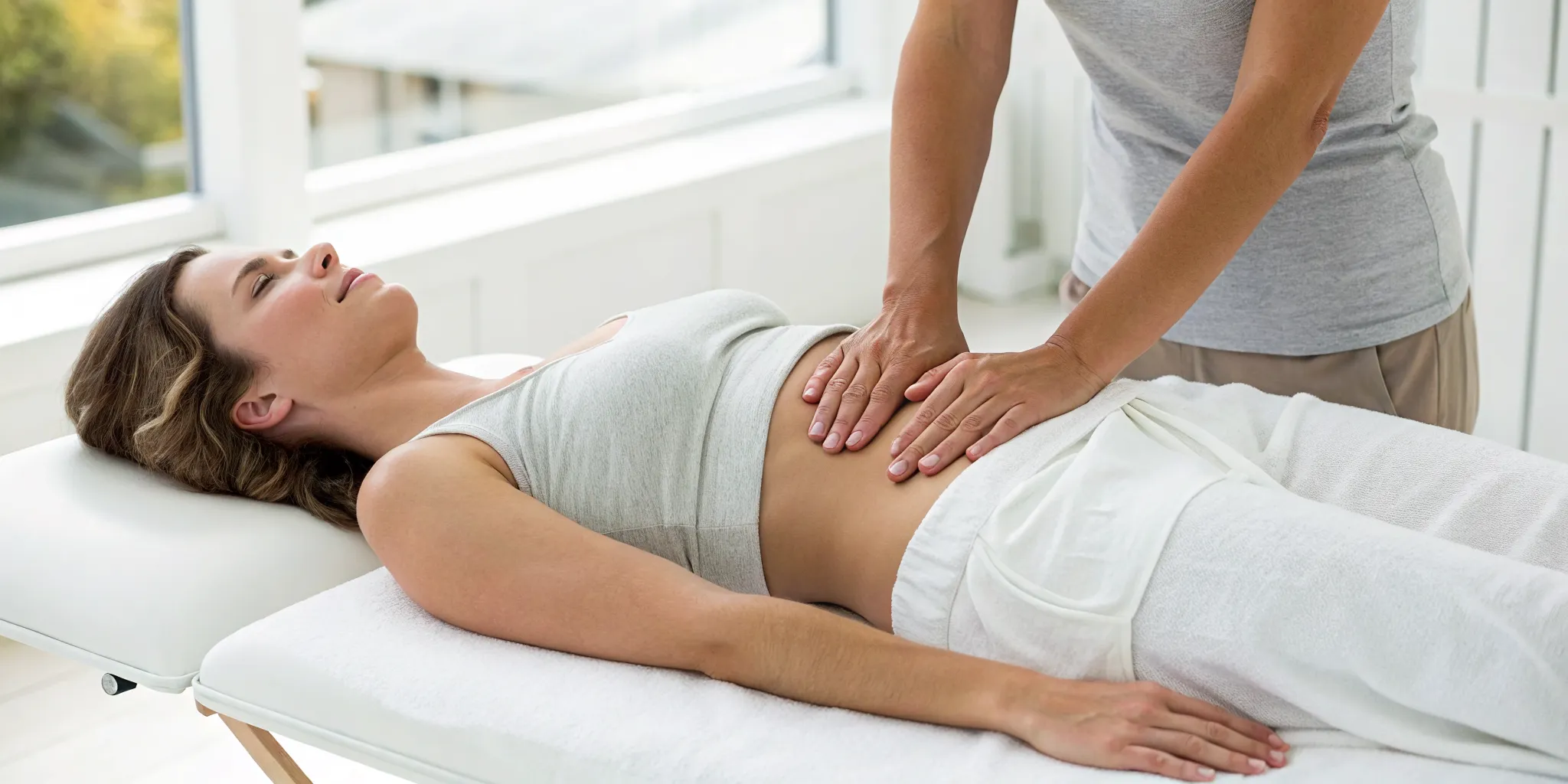
Diaphragm massage is a hands-on practice where you apply gentle, sustained pressure to the area just beneath your rib cage. This technique has two primary functions. First, it helps release the physical tension that builds up in your main breathing muscle, the diaphragm. Second, this gentle pressure helps to stimulate your vagus nerve, a key player in your body’s relaxation response. This stimulation is a direct signal to your nervous system that you are safe, helping it shift from a state of high alert into its parasympathetic mode, a state we call Rest and Request™. It’s a simple, profound way to offer your body physical reassurance.
How Your Diaphragm Holds Anxiety
If you’ve ever felt your breath catch in your throat or noticed a tight band around your ribs when you’re stressed, you’ve experienced how the diaphragm holds anxiety. As your primary breathing muscle, the diaphragm is incredibly responsive to your emotional state. When your body perceives a threat, real or imagined, this muscle often clenches and tightens, leading to shallow breathing. This creates a feedback loop that keeps your nervous system on high alert. Over time, this chronic tension becomes a stored pattern, a physical memory of stress that can contribute to ongoing feelings of anxiety. The body’s emotional and physical systems are deeply intertwined here.
Is It Supposed to Hurt? Common Questions Answered
A common misconception is that for a massage to be effective, it must be painful. This practice is not about forcing a release or pushing through pain. In fact, the opposite is true. Diaphragm massage is an invitation for your body to soften. The goal is to create a sense of safety and trust, and pain is a clear signal from your body that a boundary has been crossed. Gentle, attentive touch is a powerful way to soothe feelings of anxiety and show your nervous system that it can let go of its protective tension. Remember, your nervous system isn’t broken, it’s been brave. This practice honors that bravery with gentleness.
How Diaphragm Massage Calms Your Nervous System
When your body holds anxiety, you can’t think your way out of it. The tension is physical, stored in your muscles and breath. Diaphragm massage speaks directly to your body in its own language: touch and breath. This practice isn’t about forcing relaxation. It’s a gentle invitation for your nervous system to downshift, releasing stored tension and creating a more coherent field within you. By connecting with this core muscle, you directly influence your stress response, guiding your body back to a state of safety.
The Vagus Nerve Connection
The vagus nerve is the main communication line between your brain and body, telling your system when it’s safe to relax. When your diaphragm is tight, it signals a threat up the vagus nerve, keeping you on alert. Gentle diaphragm massage physically releases this tension, creating a new signal of safety. This stimulates the vagus nerve, letting your brain know the danger has passed. It’s a bottom-up approach; you’re using physical sensation to change your physiological state, reminding your body what it has always known: how to find its way home to calm.
From Fight-or-Flight to Rest and Request™
Many of us, especially women used to holding it all together, get stuck in a low-grade fight-or-flight mode. This sympathetic state is for short-term survival, not long-term living. Diaphragm massage with intentional breathing guides your system out of that chronic stress loop and into the parasympathetic state. We call this Rest and Request™. It’s more than “rest and digest.” It’s a state of deep restoration where you can finally hear what your body has been asking for. You move from being braced for a threat to being open, receptive, and able to tend to your own needs.
How Touch Releases Physical Tension
Your diaphragm is a muscle that holds physical tension from stress, grief, and shallow breathing. Intentional, gentle touch is one of the most ancient ways to signal safety to the body. When you place your own hands on your body to offer care, you are doing something profound. You are telling your nervous system, “I am here. You are safe. You can let go.” This simple act can lower stress levels and soothe anxiety. It’s a practice of self-witnessing, allowing tension to soften and release, creating more space for your breath and for grounded peace.
What Are the Benefits of Diaphragm Massage?
Diaphragm massage is more than just a technique; it’s an invitation to communicate with your body in its own language. The benefits aren’t about fixing something that is broken, but about remembering a capacity for calm that has always been within you. This practice offers both immediate comfort when you feel overwhelmed and a pathway to create lasting change in your nervous system. It’s a way to tend to yourself from the inside out, building a foundation of regulation that supports you through all of life’s transitions. When you’ve spent years performing strength, holding it all together for everyone else, the idea of softening can feel foreign, even scary. This practice is a gentle threshold, a way to begin that process with dignity and self-compassion. It’s not about forcing a release, but about creating the conditions for one to happen naturally. The body knows how to find its way home; this is simply one way we can listen and respond to what it has always known. By connecting with the physical center of your breath, you begin a quiet revolution, one that ripples outward into every area of your life. This is the essence of bottom-up work: tending to the body first, so that emotional and mental clarity can follow.
Soothe Your Body in the Moment
When anxiety rises, the body often feels like an unsafe place to be. Diaphragm massage is a direct, physical way to offer it comfort. By gently working with this core muscle of breath, you can provide immediate relief from the tension that accompanies stress. This simple act of touch can help quiet the noise, easing symptoms of anxiety, digestive upset, and even sleep disturbances. Research shows how this kind of focused breathing and touch promotes deep relaxation, anchoring you in the present moment. It’s a tangible way to tell your body, “I’m here with you. You are safe right now.”
Support Long-Term Nervous System Regulation
While immediate relief is a gift, the true power of this practice lies in its ability to support long-term change. Each time you practice diaphragm massage, you are gently re-patterning your body’s response to stress. You are teaching your nervous system that it can return to a state of calm more easily and stay there longer. This isn’t just a feeling; studies show that consistent practice can lead to a measurable decrease in stress levels over time. It’s how we move from being chronically stuck in fight-or-flight to building a reliable foundation in our Rest and Request™ state. Your nervous system isn’t broken, it’s been brave. This practice honors that bravery by giving it a place to finally soften.
Build Emotional Resilience and Capacity
A regulated nervous system creates a wider container for your emotional life. Diaphragm massage helps you build the capacity to feel your emotions without being swept away by them. As you release physical tension from your core, you create more internal space, which builds emotional resilience. This practice has been associated with significant reductions in perceived stress and anxiety, not because the feelings disappear, but because your ability to hold them with presence grows. This is how you reclaim your strength, not as a performance for others, but as an embodied, internal resource. You learn to meet life’s challenges from a place of groundedness, trusting that you have the capacity to move through whatever comes your way.
How to Practice Diaphragm Massage at Home
This practice is an invitation to come home to your body. It’s a quiet, physical conversation with a part of you that has worked so hard to keep you breathing, to keep you going. There is no goal here other than to offer gentle attention and create the conditions for release. Remember, your body knows the way; our only job is to listen.
A Step-by-Step Guide to Self-Massage
Begin by finding a comfortable position lying on your back, with your knees bent and feet flat on the floor. This posture softens your belly, allowing for easier access. Place the fingertips of one or both hands just beneath your rib cage. Take a slow breath in, and as you exhale, gently allow your fingers to sink inward and upward, following the natural curve of your ribs. Continue to breathe deeply as you slowly trace the edge of your diaphragm. If you find a tender spot, pause. Instead of forcing it to release, simply hold a gentle, steady pressure and breathe into it. This is a beautiful way to practice diaphragmatic breathing while tending to your body with compassionate touch.
Integrating Tools and Deeper Techniques
When you feel ready to explore a different kind of pressure, you can introduce a soft tool. A small therapy ball or even a tennis ball can offer a sustained, gentle massage. While lying on your back, place the ball just under your sternum, at the center of your diaphragm. Allow your body weight to sink into the ball, breathing deeply into the sensation. You can gently rock from side to side or simply rest there, letting the pressure do the work. This technique can help reach deeper layers of tension without any extra effort on your part. It’s another way to let your body know it is supported and can finally let go.
Create a Safe Space for Your Practice
Your nervous system is always scanning your environment for cues of safety or danger. Creating a supportive space is a foundational part of this practice. Before you begin, find a quiet place where you won’t be interrupted. You might dim the lights, light a candle, or use a diffuser with a calming scent like lavender. Having a warm blanket nearby can also add a layer of comfort and security. As Johns Hopkins Medicine suggests, a comfortable environment is essential for relaxation. By intentionally creating a safe space, you are sending a powerful message to your body: You are safe here. It is safe to rest. It is safe to feel.
What Breathing Exercises Pair Best with Diaphragm Massage?
When you pair gentle touch with intentional breath, you create a powerful dialogue with your nervous system. The breath is the current, and the touch is the anchor, together guiding your body back to its inherent state of calm. This isn’t about forcing relaxation; it’s about creating the conditions for your body to remember its own capacity for ease. By synchronizing breath and massage, you amplify the body’s signal of safety, making the shift from a state of high alert to one of deep rest feel more accessible and integrated.
This combination is a beautiful way to deepen your somatic practice. It allows you to physically witness the diaphragm’s movement while consciously shaping your breath to support its release. Think of it as a duet. Your hands listen to the rhythm of your breath, and your breath responds to the gentle invitation of your hands. This partnership helps unwind the deep patterns of tension held in the core of your body, offering a profound sense of coming home to yourself. It’s a direct path to the body’s wisdom, reminding you that you hold the tools for your own regulation.
The Basics of Diaphragmatic Breathing
Diaphragmatic breathing, often called belly breathing, is the body’s native language of calm. It’s the way we breathe when we feel most at ease. This practice involves consciously engaging your diaphragm, the dome-shaped muscle at the base of your lungs, to draw breath deep into your body. As you inhale, your belly expands; as you exhale, it gently falls. This deep, slow rhythm is a powerful signal to your nervous system. It stimulates the vagus nerve, a key player in switching your body out of a stress response and into the restorative state of Rest and Request™. It’s a simple, foundational practice for returning to your body’s center.
Two Simple Techniques: 4-7-8 and Square Breathing
Once you’re comfortable with the sensation of belly breathing, you can explore simple patterns to deepen the practice. These aren’t rigid rules but gentle structures to guide your attention. One of the most calming is the 4-7-8 breath: inhale through your nose for a count of four, hold the breath gently for seven, and exhale slowly through your mouth for eight. The extended exhale is deeply regulating and especially supportive for sleep. Another grounding option is square breathing: inhale for four, hold for four, exhale for four, and hold for four. This balanced rhythm can bring a sense of stability and presence when you feel scattered. Explore these breathing exercises and notice which one feels most like a homecoming for your body today.
The Power of Synchronizing Breath and Touch
The true magic happens when you synchronize your breath with the gentle pressure of your massage. As you practice, try to coordinate the movement of your hands with your exhale. When you breathe out, allow your fingers to sink a little more deeply, following the natural release of the muscle. This sends a clear message of safety to your body, letting it know it’s okay to let go. This synchronized practice of breath and touch does more than just ease anxiety in the moment. Consistent diaphragmatic breathing is known to support everything from chronic pain to sleep, building your long-term capacity for resilience. It’s a way of tending to your inner landscape with profound care.
How Often Should You Practice Diaphragm Massage?
The question of “how often” is less about a rigid schedule and more about building a relationship with your body. This practice isn’t another task to perfect or add to your to-do list. Instead, think of it as a conversation, a gentle and consistent return to yourself. The goal is to create a sustainable rhythm that feels supportive, not demanding. Your body has its own wisdom, and learning to listen to its cues is the most important part of the practice. Some days may call for more attention, while others may ask for only a few quiet moments. It’s about consistency, not intensity.
Guidelines for a Daily Practice
To build a foundation of regulation, a small, daily practice can be incredibly grounding. You might begin by dedicating just five to ten minutes, a few times a day, to this gentle massage. Perhaps you practice upon waking to set a calm tone for the day, during a midday break to release accumulated tension, or before sleep to invite rest. The Cleveland Clinic suggests that starting with these brief sessions can be an effective way to integrate the practice into your life. This isn’t about achieving a perfect state of calm. It’s about creating small, consistent moments of homecoming, reminding your nervous system that safety is available right here, in your own body.
How to Use Massage for Acute Anxiety
When you feel a wave of anxiety rising, diaphragm massage can be an anchor in the storm. In moments of acute stress, your body is often braced for a threat, and your breath becomes shallow. Placing your hands on your diaphragm and applying gentle pressure is a direct, physical signal to your nervous system that you are safe. This simple act can help you shift out of a fight-or-flight response and into a state of Rest and Request™. Research from Johns Hopkins Medicine highlights how diaphragmatic breathing can help manage anxiety symptoms, and pairing it with touch deepens the effect. This is a tool you can use anywhere, anytime you need to find your ground.
Build a Consistent Practice, Gently
Like any new practice, diaphragm massage becomes more natural and intuitive over time. The more you offer this attention to your body, the more readily your nervous system will respond. This is how we build new neural pathways and expand our capacity for resilience. A consistent practice teaches your body a new way of being, one where tension doesn’t have to become a permanent state. As you continue, you may notice you can handle stress more effectively, sleep more deeply, and feel more present in your life. Approach this with patience and curiosity. You are not fixing something that is broken; you are remembering a language your body has always known.
When to Pause and Seek Professional Help
Part of trusting that the body knows is learning to listen when it asks for a different kind of support. Somatic practices are profound tools for building your capacity for aliveness, but they are not meant to be used in isolation, especially when your system is feeling overwhelmed. Reaching out for professional guidance is not a sign that you’ve failed; it is an act of deep attunement and self-respect. It’s an acknowledgment that your healing deserves a dedicated container held by a trained professional.
This work is about creating a sustainable ecosystem of support around you. Sometimes, that means having a therapist, doctor, or other practitioner witness your experience and offer their expertise. This is a courageous step toward creating a more coherent field of care for yourself, which is the foundation for everything else. Remember, this is a homecoming, and every path home is valid.
Important Medical Considerations
This gentle massage is a beautiful invitation to connect with your body, but it is a companion to, not a replacement for, professional medical care. While practices like diaphragmatic breathing can be incredibly supportive, it’s important to honor your body’s unique needs. If you live with a respiratory condition like COPD or asthma, we invite you to consult a healthcare professional before beginning. This conversation is an act of care, ensuring that any new practice you bring into your life is truly supportive of your whole system’s well-being and health.
Signs You May Need Additional Support
Your nervous system isn’t broken, it’s been brave. It has developed brilliant strategies to keep you safe. Sometimes, those strategies send loud signals that more support is needed to feel truly secure. If you experience persistent anxiety that interferes with your daily life, or notice symptoms like panic attacks, severe mood swings, or thoughts of self-harm, please hear this as your body’s wise request for a different kind of care. These are important signals, and it is crucial to seek professional help when they arise. A therapist or counselor can provide a safe, co-regulating presence to help you move through these intense experiences.
How to Talk to Your Doctor
When you decide to speak with your doctor, you are stepping into a partnership. You are the foremost expert on your own lived experience. Be open about the symptoms you’re feeling in your body and how they affect your daily rhythms. It can be incredibly helpful to share the self-care practices you have been exploring, including diaphragm massage or specific breathing techniques. Giving your doctor this full picture of your experience and your efforts allows them to understand your needs more deeply and recommend the best course of action for you. This conversation is an act of advocacy for your own well-being.
What Common Mistakes Should You Avoid?
When you first bring your hands to your body for this practice, you might notice an old habit arise: the need to do it perfectly. For so many of us who are used to holding it all together, it’s natural to turn a practice of self-care into another item on the to-do list, another thing to achieve. This work is an invitation to do the opposite. It’s a gentle unlearning of the need to perform. This is your permission slip to be messy, to be uncertain, and to simply be present with what is.
The most common mistakes in diaphragm massage have less to do with the placement of your hands and more to do with the quality of your attention. Are you approaching your body as a project to be fixed, or as a wise companion to be listened to? This is a core shift from “Type A to Type Be,” a homecoming to a more easeful way of being. Your nervous system isn’t broken, it’s been brave. It doesn’t need to be forced into submission. It needs to be witnessed with compassion. By avoiding a few key pitfalls, you can create a practice that feels like a true sanctuary, a place of deep listening and genuine rest.
Gentle Is Effective: Finding the Right Pressure
One of the most persistent myths in bodywork is that for a massage to be effective, it must be painful. We’ve been conditioned to believe that deep, forceful pressure is the only way to release tension. But when we’re working with the nervous system, the opposite is often true. Your diaphragm is a sensitive, responsive muscle, and forcing it only signals danger to your body, causing it to brace even more. The goal is not to conquer the muscle, but to invite it to soften. Think of it as a respectful knock on a door, not an attempt to break it down. A common misconception is that if a massage isn’t painful, it isn’t effective. We are here to unlearn that. Trust that a gentle approach is a potent one. Your body knows how to release; your only job is to provide the safe conditions for it to do so.
Practice, Not Perfection: It’s About Building Capacity
If this practice feels awkward or even a little tiring at first, that’s completely normal. You are building a new neural pathway and reawakening a part of your body you may not have consciously connected with before. The temptation might be to try harder or to feel frustrated if you don’t experience immediate, profound relaxation. I invite you to release that expectation. This is a practice, not a performance. As the Cleveland Clinic explains, consistent practice is what makes diaphragmatic work feel more natural over time. Each time you place your hands on your body, you are building capacity for presence and expanding your ability to stay with sensation. Some days will feel easy and open; others will feel tight and resistant. Both are welcome. This isn’t about achieving a perfect outcome. It’s about showing up for yourself, again and again, with gentleness.
This Is One Tool, Not the Only Tool
Diaphragm massage is a powerful and accessible tool for soothing your nervous system, but it is one tool in a much larger toolkit. It is not meant to be a cure-all or a replacement for professional medical or therapeutic support. Think of it as a way to build your own internal resourcefulness, giving you a tangible way to offer yourself comfort and regulation in moments of distress. It’s a practice that can beautifully complement other forms of care you may be receiving. While massage can significantly lower stress levels and improve your mood, it works best as part of a holistic approach. As you build your personal regulation toolkit, you’ll discover which practices serve you best in different situations. Diaphragm massage may be your go-to for acute anxiety, while another somatic practice might support you in processing grief. The goal is to have a rich collection of resources you can turn to, meeting your own needs with skill and compassion.
How Diaphragm Massage Fits Into Your Toolkit
Diaphragm massage isn’t meant to be another task on your wellness to-do list. Think of it as one gentle, supportive tool in a larger ecosystem of care you are building for yourself. Your body has its own wisdom, and this practice is an invitation to listen more deeply to what it has always known. When you begin to tend to this central, vital muscle, you may find it naturally deepens other practices you already have. This isn’t about adding more things to do; it’s about creating more space to simply be. By integrating this practice, you are building a more intimate and trusting relationship with your body, one that supports your entire nervous system.
Pairing with Other Somatic Practices
This practice doesn’t exist in a vacuum. It beautifully complements other body-based approaches to well-being. When you pair diaphragm massage with conscious breathing, you create a powerful synergy. Experts recognize that diaphragmatic breathing can help manage symptoms of anxiety, chronic pain, and sleep issues. Imagine following a gentle yoga session with five minutes of diaphragm massage, or using this touch-based practice to ground yourself before meditation. The goal is to weave these tools together in a way that feels supportive to you. This is about creating a conversation between touch, breath, and body, allowing each practice to inform and deepen the others in a way that feels like a homecoming.
Build Your Personal Regulation Toolkit
Your regulation toolkit is a collection of practices you can turn to anytime, anywhere, to find your center. Diaphragm massage, paired with deep belly breathing, is a foundational piece of this kit. It’s a tangible way to soothe your nervous system when you feel overwhelmed. This kind of intentional breathing is a well-regarded technique for reducing stress and inviting deep relaxation. It works by directly engaging the part of your nervous system responsible for rest. Evidence confirms that this practice can lower physiological stress markers, making it a reliable anchor in moments of anxiety. This tool is yours forever, ready to support you at 3 a.m. just as it is in the middle of a busy day.
The Ripple Effect of One Regulated Adult
Tending to your own nervous system is never just for you. As you use practices like diaphragm massage to find more calm and regulation within yourself, you create a more coherent field around you. This is the ripple effect: one regulated adult can gently shift the energy in a family, a workplace, or a community. We know that massage can relieve symptoms of anxiety and stress, improving mood and creating a sense of ease. When you feel more grounded and present in your own body, you bring that presence to your interactions. This isn’t about performing calm for others; it’s the natural result of coming home to yourself. Your regulation becomes a quiet, steadying invitation to everyone you meet.
Create Your Sustainable Diaphragm Massage Practice
Creating a sustainable practice isn’t about adding another demanding task to your list. It’s an invitation to build a lasting, supportive relationship with your own body. This isn’t about achieving perfection; it’s about creating a reliable, internal resource you can return to whenever you need it, a true homecoming to yourself. The goal is to make this practice feel like a gentle support, not a rigid requirement. By weaving it into the life you already live and adapting it to what your body needs each day, you create a tool that is truly yours. This is how we build a foundation of regulation that can hold us through life’s transitions.
Weave This Practice Into Your Daily Rhythms
The most profound practices are often the ones that fit seamlessly into our lives. You don’t need to set aside an hour to make this work meaningful. Instead, look for the small pockets of time that already exist. Can you practice for two minutes before you get out of bed in the morning? Or while you wait for your tea to steep? Linking the practice to an existing habit helps your nervous system recognize a new, calming rhythm. As research notes, this kind of rhythmic breathing can actively reduce stress and increase your sense of calm over time.
Adapt the Practice to Your Body’s Needs
Your body is not the same every day, and your practice shouldn’t have to be either. This is where you get to honor the deep truth that the body knows. Some days, you might feel tender and need only the lightest touch. On other days, you might feel a deep ache and a need for firmer, more sustained pressure. Let your body lead. This practice is a powerful tool for managing a wide range of physical and emotional states. Johns Hopkins Medicine highlights how diaphragmatic breathing can help with symptoms of anxiety and chronic pain, so you can trust that adapting the practice to your unique needs is part of its power.
Make the Practice Yours Forever
This practice is a gift you give yourself. Once you learn the foundations, the method is yours forever. It is an internal resource that no one can take away, a way to offer yourself comfort and regulation from the inside out. This isn’t about dependency on an external tool; it’s about remembering the capacity for self-healing that already lives within you. Committing to this practice, even for a few minutes each day, builds a powerful pathway back to your body’s natural state of Rest and Request™. Studies confirm that consistent practice can decrease stress as measured by physiological markers, proving what your body has always known: gentle, consistent attention is deeply regulating.
Related Articles
- Nervous System Healing: A Guide to Calm and Inner Balance
- Unlocking the Feeling of Intuition | Healing Home
- Somatic Healing Coach for Women | Healing Home
- Nervous System Regulation Techniques for Women | Healing Home
- Spiritual alignment, somatic healing, and self-awareness
Frequently Asked Questions
What if I don’t feel immediate relief? Is it still working? Yes, it is. This practice is less about achieving an instant result and more about building a relationship of trust with your body over time. For many of us, especially those used to performing strength, the body has been holding tension for years. It can take time for your nervous system to receive the message of safety and begin to soften. Each time you practice, you are creating a new neural pathway. You are teaching your body, gently and consistently, that it is safe to let go. This is a practice of capacity building, not a quick fix.
Why does my diaphragm feel so tender or tight when I touch it? Feeling tenderness is very common, and it’s a sign that you are connecting with a place that has been holding a great deal of physical and emotional tension. Your diaphragm is a hard-working muscle that responds to every stressor, every held breath, and every moment of bracing. That tenderness is stored history. Instead of seeing it as a problem to be solved, see it as an invitation to be gentle. Your body is communicating with you. Breathe into that tenderness with compassion; it’s a sign that your body is ready to be witnessed.
Can this practice bring up strong emotions? It absolutely can, and this is a normal part of somatic work. The body stores not just physical tension but also unprocessed emotions like grief, anger, or fear. When you create a safe space and offer gentle touch, you are giving your body permission to finally release what it has been holding. If emotions arise, see if you can simply allow them to be there without judgment. They are not a sign you are doing something wrong; they are a sign that your body trusts you enough to let go. If it feels like too much, you can always pause, place a hand on your heart, and come back to the practice later.
How is this different from just doing deep breathing exercises? Deep breathing is a powerful tool on its own, but adding gentle, intentional touch creates a different kind of conversation with your nervous system. Touch is one of the body’s primary languages for safety. When you place your own hands on your body with the intention of care, you are sending a direct, physical signal that you are present and supportive. This combination of breath and touch can help unwind tension more deeply, offering your body a tangible anchor and reinforcing the message that it is safe to enter a state of Rest and Request™.
How do I know if I’m using the right amount of pressure? The right amount of pressure is the amount that allows your body to soften, not brace. This is an invitation, not an intervention. If you feel your muscles tightening against your fingers, that’s a signal to ease up. The goal is to meet the tension with a gentle, sustained presence that feels supportive, not forceful. Your body knows what it needs. Let sensation be your guide. The most effective pressure is often much lighter than you think, just enough to let your diaphragm know you are there, listening.