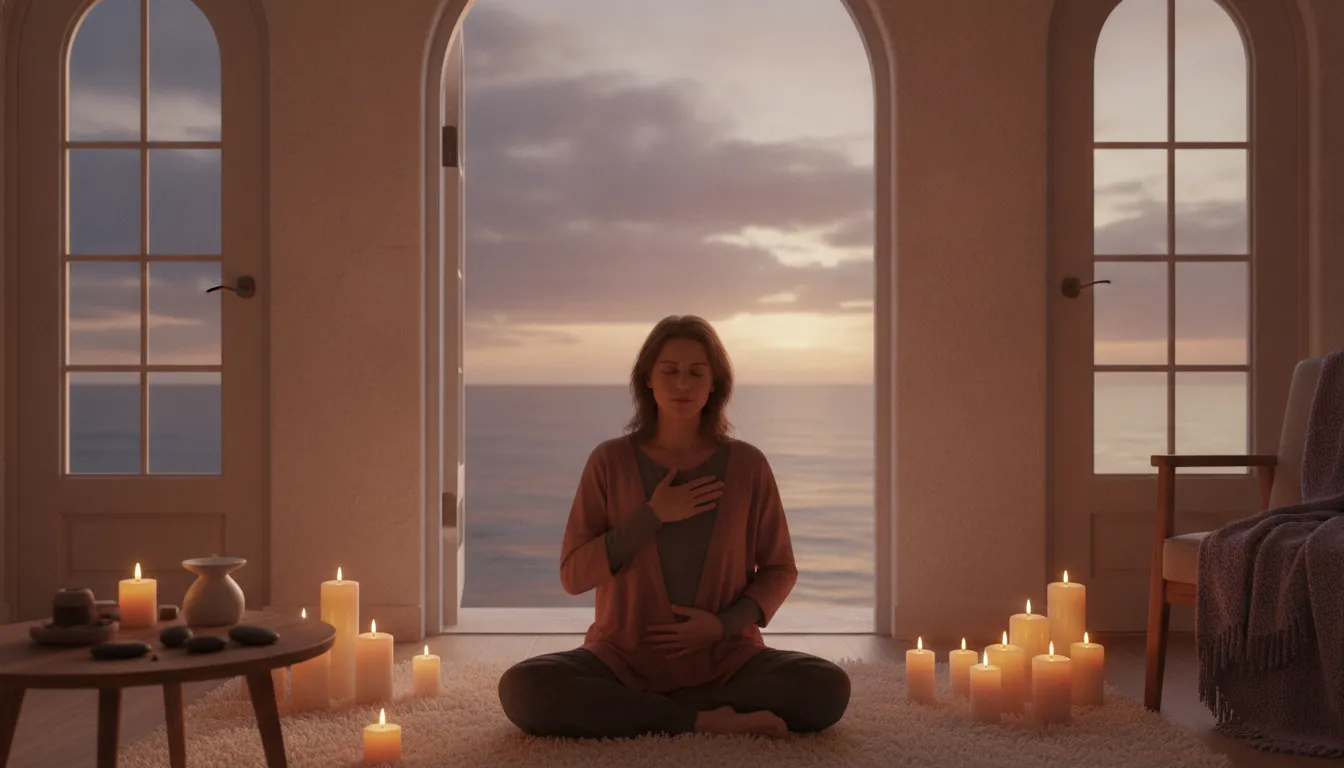
Parasympathetic Nervous System Rest: A Gentle Guide
Rest can be difficult when your body is still listening for danger. Fight-or-flight activation can quicken the heart and make the breath feel shallow. Creating more capacity for rest begins with listening to the body, not forcing it into calm.
Explore body-based invitations in The Healing Home Shop
Parasympathetic nervous system rest is the active state where your body repairs cells and digests food. This system acts like a brake for your stress response to help you find calm. While the fight or flight state uses energy to meet threats, the parasympathetic side saves energy to keep your organs healthy. According to research on the autonomic nervous system, this part of your body controls things like heart rate and blood pressure without you thinking about it. At Healing Home, we call this state Rest and Request. It is a deep body-based shift that lets your body stop searching for danger and start the work of cultural repair from the inside out.
Many people learn to push through the day with stress. Understanding parasympathetic nervous system rest begins with recognizing what safety can feel like in your own body.
Parasympathetic nervous system rest: what it means
The parasympathetic nervous system is the part of your body that handles rest and repair. Most call it the “rest and digest” system. It acts like a brake on your stress response.
While the sympathetic system gets you ready to fight or flee, the parasympathetic system brings you back to center. At Healing Home, we call this state Rest and Request. It is more than just sleep or sitting still.
It is a deep state where your body feels safe enough to heal and grow. This autonomic system works without you thinking about it. It controls some key jobs:
- Your heart rate and blood pressure
- How well you digest your food
- How your body heals from stress
When you are in this state, your body can move from survival to peace.
The balance of your body
Your body always looks for a state called homeostasis. This is a steady balance that keeps you healthy. To hit this goal, your nerves work in pairs.
One side revs you up, and the other slows you down. By how nervous system regulation supports balance, you find that balance again. It is not a task to finish but a way to live.
This system uses paths that start in your brain and your spinal cord. These nerves reach out to your heart, lungs, and gut. Their job is to tell your organs that the danger is gone.
When they do, your breath slows. Your muscles let go of the tension they held for so long.
Rest versus collapse
Many think that being tired or numb is the same as rest. But true parasympathetic nervous system rest is not like shut down. In a state of collapse, your body pulls back because the stress is too big.
You might feel heavy or spaced out. This is a survival move, not a choice. Real rest feels like an open door, not a locked one.
It is a state where you are alert but calm. You are not hiding from the world. Instead, you have the room to meet it.
This is what it means to move from a place of being brave to a place of being home. Your nervous system is not broken. It has just been doing its best to keep you safe.
A homecoming for the body
Nervous system work is about a homecoming to who you are. We view this as a form of cultural repair. Most of us live in a world that asks us to stay in high gear all the time.
Learning parasympathetic nervous system rest helps you break that cycle. The nervous system is like a tuning fork that attracts a certain frequency.
When you stay in this regulated state, you create a calm space for those around you too. One regulated adult can help others feel safe.
Your body has always known how to do this. Giving it steady signals can help begin the work.
Fight or flight and rest are partners, not enemies
Your body has two main ways to meet the world. One helps you move and act. The other helps you slow down and mend. People often think of these as good and bad. They see stress as a foe and rest as the goal. But your body does not work that way. Both sides of your autonomic nervous system are vital. They are partners in a dance that keeps you safe and well.
Two sides of the same coin
The first side is the sympathetic system. This is what many call the fight-or-flight mode. It is not an error. It is a set of tools your body uses to meet a threat. When you face stress, your heart rate rises and your blood flow shifts. This gives you the fuel to act fast. It is how your body has been brave when you needed it to be.
The other side is the parasympathetic nervous system rest and digest state. At Healing Home, we call this Rest and Request™. This state lets your body repair cells and build back energy. It is not just about being still. It is about giving your body the space to mend. You need both to live a full life. Problems only start when you get stuck in one mode for too long.
| Feature | Sympathetic (Action) | Parasympathetic (Rest) |
|---|---|---|
| Main Goal | Action and survival | Repair and recovery |
| Heart Rate | Goes up to move blood | Goes down to save energy |
| Digestion | Slows down or stops | Restarts to take in fuel |
| Mental State | High focus or alarm | Open and calm |
| Body Feel | Tight or ready | Soft and grounded |
A path to balance
Most of us spend too much time in the action state. This is why a body-based path toward regulation is so key. It is not about ending stress forever. That is not how life works. Instead, it is about building the skill to move back and forth. You want to meet a task with focus, then return to a place of peace.
When you learn to move between these states, you find more ease. You stop being a victim of your stress. You start to use your body as a wise guide. This work is not a quick fix. It is a homecoming. It is the path to a life where you can act with power and rest with depth.
Why Rest and Request reframes rest and digest
Most people know the phrase rest and digest, which shows the state where your body feels safe and calm. This is the work of your parasympathetic nervous system. It helps you heal after a long day of stress.
But for many women, just resting feels hard because being still can feel unfamiliar. If you have been in a state of stress for a long time, stillness may not yet feel supportive. That is why we use a new term called Rest and Request™.
Adding power to healing
Rest and Request™ is not just about doing nothing or waiting for calm to arrive. It adds a step where you ask your body for what it needs in the moment. When you are in a rest and request state, you take an active part in the work.
This helps you build trust with yourself as you move through your daily life. It moves you away from the fawn or freeze states that come with long stress. You start to feel like you have power over your own body again.
The request part of the name means you check in with your heart and gut. You ask, “What do I need right now?” Maybe you need a warm tea, or maybe you need to move your feet to feel grounded.
This choice gives you power back and turns a passive state into a real choice. This shift is key when you want to stop feeling like a victim of your stress. You are no longer just waiting for the storm to pass.
The role of the vagus nerve
To reach a state of calm, you can use body tools like humming or slow breaths. The vagus nerve is a big part of this system as it runs from your brain down to your gut. This nerve helps in supporting your return to balance each day.
You can wake up this nerve by humming or singing to send a sign to your brain. These sounds tell your system that the danger is over and it is safe to rest. It is a simple way to tell your body it can stop the fight or flight response.
You can also use your breath to signal safety to your heart and mind. A slow breath in for four counts, a short hold for two, and a long breath out for six works well. This way of breathing helps your body feel at ease quickly.
It tells your heart to slow down and lets your muscles go soft as you let go. These small acts build up over time to create a strong sense of safety in your own skin. You are training your body to find peace again.
A path to coming home
This method is more than a fast fix for stress, as it is a way to return to yourself. Many women find that finding calm feels like coming home after a long trip. You are not changing who you are or how you think.
You are just clearing the path so your body can work the way it was meant to work. We call this cultural repair because it is about fixing the way we live. It helps our bodies feel at peace in a busy world.
When you practice these steps, you create a space for deep work to happen. This work goes past just feeling good for an hour or a day. It helps you build a life where you feel safe most of the time.
You start to see that your system is not broken and does not need to be fixed. It has just been brave for a long time in a hard world. Now, it is time to give it the rest and the care it needs to grow.
What does the shift toward rest feel like?
Moving your body toward rest is not a mental choice you can force. It is a felt sense that happens deep in your autonomic nervous system. This part of you runs things like your heart rate and breath without you thinking about it. When you start to find parasympathetic nervous system rest, your body lets go of the high alert state. It may have held this state for a long time.
Spotting the high alert state
Before you can rest, you must see where you are now. Many women live in a state of “mobilization.” This means your body feels like it is always in danger. You might feel a fast heart rate, tight chest, or a mind that will not stop. These are signs of the sympathetic nervous system taking over. You may also notice a “performed calm.” This is when you look okay on the outside but feel like you are bracing for a storm on the inside.
You may also find yourself in a “fawn” or “freeze” state. In these states, you might feel numb or like you have to please everyone to stay safe. Your body is doing its best to keep you alive, but it is stuck in survival mode. Seeing these signs is the first step toward regulating your parasympathetic nervous system. It helps you see that your symptoms are just your body trying to be brave.
Finding safety in the body
When the shift toward rest starts, it can feel strange at first. You might feel a big sigh, a soft gut, or warm hands. This may reflect your parasympathetic nervous system rest becoming more available. Healing Home calls this state Rest and Request™. It is a time for your body to digest, mend, and find a sense of home. You are no longer just reacting to the world around you.
This shift is not a one-time event or a “fix.” It is a homecoming. You are building the space to stay present even when things are hard. As you move into this state, you might notice your breath slows down. Your muscles may stop bracing for a hit. This is what it means to move from “Type A to Type Be.” Your nervous system becomes a tuning fork that draws in a more calm and clear field.
Curiosity as a tool for healing
As you see these shifts, try to be curious instead of judging. Your nervous system is not broken; it has been brave. It has worked hard to keep you safe through life shifts and stress. When you look at your body with kind eyes, you start the work of “cultural repair.” This means seeing your health as more than just a personal goal. It is about how we relate to ourselves and each other.
Try to be a witness to your own body. See when you feel tight and when you feel open. You do not need to change anything right away. Just knowing your state can help you start “rest and request.” By choosing to listen to your body. You are taking a small but big step toward a calm life. You are learning to return to yourself, one breath at a time.
How can you practice Rest and Request?
Rest and Request™ is a gentle way to lead your body back to a state of calm. It pulls you out of the rush of stress and into safety. This practice helps you find parasympathetic nervous system rest without force.
You do not have to fix yourself or change how you feel. Instead, you offer your body an invitation to land in the now. This is a time to simply be with what is true for you.
The autonomic nervous system manages how your body reacts to the world around you. When you are stuck in survival mode, your body stays on high alert. This practice helps you signal to your brain that the threat is over. It is a slow process that honors what your body has already done to keep you safe.
Find your ground through choice
Every somatic practice must start with choice. You decide where you sit and how long you stay. This act of choosing is the first step in practicing nervous system regulation. It builds a sense of power that may have been lost during times of high stress or life change.
Once you choose your space, take a moment to look around. Looking around tells your brain that you are safe in your room. Let your eyes land on things that feel neutral or pleasant.
This simple act helps anchor your mind in the “now” instead of the “what if.” It prepares your system to let go of old patterns of fear.
INLINE_IMAGE_GROUNDING
Support your body and breath
Rest and Request™ relies on body support to create ease. You might lean against a wall or sit in a firm chair. The goal is to let the floor or the chairs hold your weight.
When you feel held, your muscles can stop their constant work. This support is the base for a true nervous system homecoming.
You can then try a small test with your breath. Do not try to breathe deeply if it feels hard. Instead, try a slightly longer exhale.
A long exhale can help trigger the parasympathetic nervous system response. If this feels tight or wrong, you can stop. Your body knows what it needs most in each moment.
Listen and settle with the shift
As you settle, notice any small needs that arise. You might want to shift your hip or wrap a blanket around your shoulders. These small acts of care show that you are listening to your body again.
It is about meeting your needs as they come up in real time. This builds trust between your mind and your body. You are learning to be a safe place for yourself.
Take a few minutes to let the practice sink in before you move on. This settling time is when your system learns a new way to be. It is not about a quick fix or a big shift.
It is about a quiet return to your own center. You are simply coming back to what has always been there. Return to yourself.
- Choose your space: Pick a spot where you feel most at ease. You can sit, lie down, or even stand if that feels better. Knowing you can change your mind at any time is a key part of the work.
- Look around: Slowly turn your head and look at your room. Find three things that look or feel calm to you. This tells your brain that there is no threat right now.
- Find support: Lean into your chair or the floor. Notice the spots where your body meets a surface. Let those surfaces carry your weight so your muscles do not have to.
- Gentle exhale: Try to let your out-breath be just a bit longer than your in-breath. Do not force it or count if that causes stress. Just let the air flow out like a slow sigh.
- Notice and rest: Stay still for a moment and see if your body asks for anything. Maybe you need a stretch or a sip of water. Honor that need and then rest in the quiet you have created.
Always listen to your own body during these steps. If you feel dizzy or very anxious, stop the practice and open your eyes. This work is meant to support you, not push you too far.
If you have a history of trauma, you may want to work with a trained guide. They can help you stay within what feels safe for you. Return to yourself with care.
Rest creates room for a different request
When you shift into parasympathetic nervous system rest, your body stops looking for threats. In survival mode, your brain only cares about safety. This leaves very little room for deep bonds with others or for planning your future. By choosing to slow down, you start a process of cultural repair. You move from a state of fear to one of open request. This change allows you to focus on growth instead of just getting by each day.
The autonomic nervous system runs your heart rate and breath without you thinking about it. It has two main parts that work to keep you in balance. One part helps you face stress, while the other helps you mend. When you find true rest, your body can finally heal. This rest is the base for all else you want to do in your life.
Moving from survival to bond
When you feel safe, your system helps you rest and digest. This state is not just about sleep or sitting still. It is about having the mental room to be with your family and friends. When you are not stuck in a fight-or-flight state, you can listen more deeply to those you love. You can respond to people with kindness instead of anger or fear.
This shift allows you to move from “Type A” to “Type Be.” It is not a change to who you are at your core. Instead, it is a homecoming to your true self. You can learn more about learning to regulate your nervous system to find this calm. When your body feels safe, you can make a different request of the world around you. You ask for what you need with a clear and steady voice.
The ripple effect of regulation
Healing Home teaches that one regulated adult creates a more coherent field. Your nervous system is like a tuning fork that attracts certain frequencies. It can pick up on the stress or calm of the people in your home. When you find peace, you help the people around you find it too. Your calm can help settle a room full of tense people without you saying a word.
This is how we break old family patterns that no longer serve us. By using tools from The Healing Home Shop, you can build a practice that lasts. You stop reacting to every small stressor in your day. This creates a quiet space where you can choose how to act. You are no longer just surviving; you are building a life of meaning and depth for your whole family.
Healing as cultural repair
True rest is more than a short break from a busy job. It is a way to heal the deep wounds that stay in the body for many years. We often think of healing as a task you do alone. But when you regulate your system, you add to a much larger change in our world. You help build a culture where rest is the new standard for everyone.
This work turns your wounds to wisdom over time. You begin to see that your system was not broken; it was just being very brave. By resting, you honor the needs of your body and your spirit. You create room for a new way of living that values peace over speed and noise. This is the heart of the Rest and Request™ method that guides our work.
Explore Rest and Request tools in The Healing Home Shop
Frequently Asked Questions
Why can I not relax even when I feel tired?
If you cannot relax, your body may be stuck in a state of high alert. This happens when the sympathetic nervous system stays active, even without a real threat. According to the National Library of Medicine, this part of the system handles the fight-or-flight response. When it stays “on,” you might feel tense even when you are tired. Your body needs to shift into a rest state to find true ease.
How do you activate the parasympathetic nervous system for rest?
You can help your body shift into rest by using simple tools like breathwork and sound. Hum or chant to stimulate the vagus nerve. This is a main tool for activating the parasympathetic system. The Healing Home Method also gives a breath pattern to use. Try to inhale for four seconds, hold for two, and exhale for six. These body signals tell your brain that you are safe. This allows your heart rate to slow and your muscles to soften.
What are the symptoms of a nervous system reset?
A nervous system reset often brings a sense of deep relief or sudden calm. You might notice your breathing becomes deeper and your heart rate slows down. Some people feel a warmth in their belly or a release of tension in their jaw and shoulders. It is also common to feel a wave of tiredness as your body finally lets go of chronic stress. This shift marks the move from survival mode back to a state of balance.
What is the difference between fight-or-flight and Rest and Request™?
Fight-or-flight is the body’s way of preparing for a threat by increasing heart rate and alertness. In contrast, Rest and Request™ is a way to frame the parasympathetic state of safety and repair. While fight-or-flight prepares the body for action, Rest and Request™ invites rest, digestion, and connection. This shift is not about a quick fix. It is about expanding the body’s capacity to return after times of stress.
This article offers somatic education, not therapy or medical advice. If symptoms are persistent, severe, or concerning, consult a qualified healthcare professional.
Are you ready to move from survival to rest?
Rest does not have to become another demand. A small, chosen pause can be an invitation to notice what your body has always known and to make room for a different request.
When it feels right, explore body-based tools in The Healing Home Shop.
Return to yourself.