
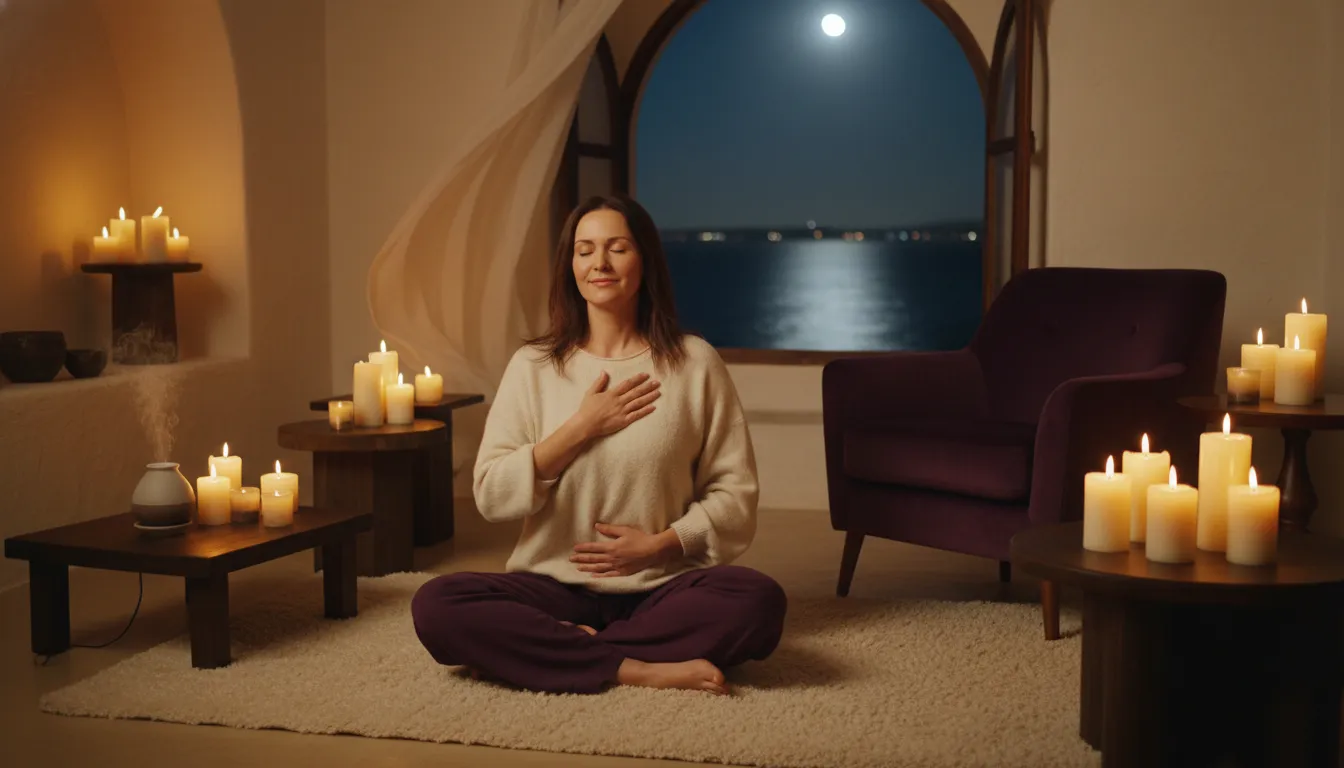
If sitting still makes your mind race faster, forcing calm is not the answer. During divorce, burnout, grief, or identity change, your body may need a gentler starting point.
Somatic meditation is a body-first practice that brings gentle attention to physical sensations, such as warmth, tension, breath, tight shoulders, or grounded feet. Instead of asking you to clear your mind or analyze a painful story, it starts with body cues when thinking feels exhausting. Traditional mindfulness can also calm the nervous system and reduce cortisol, according to the Mayo Clinic. Somatic meditation differs because your physical state becomes the starting place for awareness, rather than a problem to push through or explain. During divorce, burnout, grief, or identity change, this gentle practice can support regulation and reconnection without asking you to relive the past at your own pace.
Ready for support that respects your pace? Explore Healing Home services when you want a grounded next step.
This guide answers a simple question without asking you to overhaul your routine or revisit painful memories. Before trying any exercise, we will begin with What is somatic meditation?, then clarify how a body-first approach differs from thought-focused practices. The path begins with one grounded definition, one gentle practice, and your body’s right to move at its own pace.
What is somatic meditation?
Somatic meditation is a body-first form of awareness. Instead of trying to quiet your thoughts, you gently notice what is happening in your body now. That may include your breath, muscle tension, warmth, tingling, heaviness, or the feeling of your feet on the floor.
The word “somatic” refers to the felt experience of being in your body. In practice, this means noticing sensations without rushing to change them or explain them. This is one reason somatic meditation can feel more grounded than a thought-focused exercise.
Body awareness, breath, and safety
Breath can be a helpful place to start, but it is not a test. You might notice how breathing feels in your chest or belly. You could also choose a neutral anchor, such as the support of a chair. This may help if focusing on breath feels uncomfortable.
A gentle practice may help you build awareness of cues linked with ease or stress. It does not ask you to relive painful events. This body-first approach also fits within a broader view of nervous system healing. Safety and choice matter more than forcing a certain response.
Somatic meditation is related to mindfulness, but the emphasis is different. Mindfulness may involve thoughts, images, breath, and daily activities. Somatic meditation begins with felt sensations. The Mayo Clinic overview of mindfulness exercises notes that mindfulness may calm the nervous system and reduce the body’s stress hormone, cortisol.
Nervous system regulation does not mean staying calm at all times. It means learning to notice your present state and respond with care. You may pause, shift your posture, look around the room, or stop the practice. Those choices are part of the practice, not signs that you are doing it wrong.
This approach can be a useful starting point for people who feel stuck in thought loops or disconnected from physical cues. If burnout is part of your experience, learning what somatic healing is can add more context. Somatic meditation is a supportive wellness practice, not a replacement for medical or mental health care.
For beginners, the aim is simple: notice one sensation, stay curious, and respect your limits. If a sensation feels too intense, return to a neutral anchor or take a break. A slower pace is still a valid practice.
How is somatic meditation different from traditional mindfulness?
Traditional mindfulness and somatic meditation overlap, but they do not always begin in the same place. Both invite present-moment awareness without judgment. The main difference is the entry point: mindfulness may start with thoughts or breath, while somatic meditation starts with felt signals in the body.
A different starting point
Traditional mindfulness often asks you to notice thoughts, then let them pass without getting pulled into them. It may also use breath, guided imagery, or awareness during daily tasks. The Mayo Clinic’s mindfulness guide notes that mindfulness can calm the nervous system and reduce the body’s stress hormone, cortisol.
Somatic meditation is more body-first. Instead of starting with mental activity, you gently track sensations such as warmth, tightness, tingling, heaviness, or ease. You do not need to fix the feeling or search for a story behind it. The practice is about noticing what is present at a pace that feels manageable.
| Point of comparison | Traditional mindfulness | Somatic meditation |
|---|---|---|
| Focus | Present-moment awareness | Present-moment awareness through the body |
| Entry point | Thoughts, breath, or a daily task | Physical sensations and signs of ease |
| Goal | Observe without getting caught in thought loops | Build body awareness and support regulation |
| What to notice | Thoughts, breath, emotions, or surroundings | Pressure, warmth, tension, movement, or support |
| When it helps | When you want a broad awareness practice | When starting with the body feels more grounded |
What beginners can notice
For a beginner, the difference can feel simple. In somatic meditation, the question is not, “How do I clear my mind?” It is. “What feels steady enough to notice right now?” Your starting point might be the chair beneath you or your feet on the floor.
- The weight of your body against a chair or bed
- A softening in the jaw, hands, or shoulders
- The pace of your breath without trying to change it
- A place that feels neutral, calm, or supported
This gentle focus is useful when quiet sitting feels too mental or effortful. Our guide to somatic-based guided meditation explores how a guided practice can support women dealing with burnout.
Choosing based on what you need
Neither approach is a test, and one is not better for every moment. Traditional mindfulness may suit you when observing thoughts feels accessible. Somatic meditation may be a better place to begin when body cues feel clearer than mental ones.
You can also blend the two. Start by feeling the support beneath you, then notice the breath or any thoughts that pass through. If a practice feels overwhelming, pause and seek support from a qualified health professional.
Why body-first regulation matters during transition
Divorce, grief, burnout, an empty nest, and identity change can unsettle your sense of safety. During a major shift, the mind may reach for answers before the body feels ready. You may replay a conversation, map every possible outcome, or judge yourself for not moving forward faster.
This does not mean your nervous system is broken. It has been brave. It may have worked hard to protect you through a season that asked too much. A body-first practice gives that effort respect instead of treating it as a flaw to fix.
Somatic meditation starts with what is present in the body. You might notice a tight jaw, a clenched belly, shallow breathing, or the support of the chair beneath you. You do not need to explain the feeling or force it to leave. The first step is gentle attention.
Safety before analysis
Analysis can be useful, but it may not be the best place to begin when your system feels on guard. A simple body cue can offer a steadier starting point: feet on the floor, a slower exhale, or a hand resting on your chest. This is not about pushing for calm. It is about meeting your body where it is.
The body-first approach does not ask you to retell every painful event. It creates room to notice a sensation without making it a problem. That matters when a transition has left you tired of explaining, performing, or trying to think your way into feeling safe.
This gentle pace also fits the needs of women living with burnout. If you want a deeper look at the body-based lens, read what somatic healing is. A related guide explores somatic-based guided meditation for women whose stress has built over time.
Somatic meditation does not replace therapy, medical care, or mental health support. It can sit beside them as a gentle practice. The aim is not to achieve a perfect state. It is to build a small moment of contact with your body before asking the mind to solve the whole story.
There is support for starting small. Mayo Clinic notes that mindfulness can calm the nervous system and reduce the body’s stress hormone, cortisol. It also notes that mindfulness can happen during daily tasks. For a body-first practice, this means regulation does not need to become one more demand on a full day.
On some days, contact may mean noticing one breath or the weight of your feet. On other days, it may mean resting rather than practicing. The point is not to rush emotional processing. It is to offer the body a safer place from which later reflection may begin.
Need a supported way to start? Healing Home services can help you explore body-based support without forcing a pace that feels too fast.
How do you practice somatic meditation as a beginner?
A low-pressure starting point
Beginner somatic meditation can be simple. You do not need special gear, a perfect setting, or a long session. The aim is not to force calm. It is to notice what feels steady enough right now and keep your choices open.
You can practice while sitting, standing, walking, or lying down. The best position is the one that feels most supportive today. This flexible approach reflects Mayo Clinic guidance on mindfulness exercises. It also makes room for a short practice during an ordinary day.
Six gentle steps
Try the sequence below for a few minutes. Move slowly and skip any step that does not feel helpful. This is a body-first check-in, not a test. If you want more guided options, explore this somatic-based guided meditation resource.
-
Choose your position. Sit, stand, or lie down in a place that feels supportive. Keep your eyes open, soften your gaze, or close them only if that feels comfortable.
-
Orient to the room. Look around at an easy pace. Notice a color, a shape, and one sound. Let your body register that you are here, in this room, now.
-
Add gentle contact. Place one hand on your chest, belly, or thigh. You can also rest both hands beside you. Choose the option that feels neutral or supportive.
-
Notice one sensation. Find a simple body cue, such as warmth, pressure, tingling, or the weight of your feet. Name it without trying to fix it or explain it.
-
Widen your attention. Shift between that sensation and something steady around you. You might notice the chair, the floor, or a familiar object. Stay with each focus briefly.
-
Close with choice. Take one natural breath and look around again. Ask what would support you next: water, movement, rest, or returning to your day.
When to pause
A gentle practice should leave room for stopping. If you feel flooded, dizzy, numb, panicked, or more distressed, pause and orient to the room. You can stand up, sip water, or contact someone you trust.
Somatic meditation can be a supportive practice, but it is not a replacement for medical care or mental health care. Seek help from a qualified professional if strong distress continues. If you want added support, learn about professional somatic therapy and choose an approach that respects your pace.
What might you notice during somatic meditation?
A range of body signals
Somatic meditation is not a test, and there is no correct sensation to find. You might notice warmth in your hands, tightness in your jaw, a heavy chest, or a numb area. Tingling, a shift in breathing, restlessness, and a sense of calm can also come into view.
The practice is to notice what is here without rushing to change or explain it. That approach is close to the present-moment awareness described in these mindfulness exercises. If you are new to body-based practice, learning what somatic healing is can add useful context.
Emotions and quiet sessions
Sometimes an emotion may arise as you pay attention. You might feel sadness, irritation, relief, or tears. You may also feel neutral, distracted, or unsure what you notice. None of these responses proves that a session worked or failed.
You do not need to search for a big release. A quiet session still gives you time to listen. If nothing obvious appears, notice one simple point of contact instead. The floor under your feet or the chair beneath you is enough.
Staying within your capacity
Keep the focus gentle. If a sensation or emotion starts to feel like too much, look around the room and name what feels steady. You can open your eyes, shift position, pause, or stop. Returning to the room is part of the practice, not a setback.
Two simple options can help: Rest and Request. Rest means taking a break, lying down, or choosing a shorter practice. Request means asking for support from someone you trust. If you want more guidance, professional somatic therapy may offer a supported setting.
Somatic meditation should stay within your capacity. It is not a reason to push through distress or relive painful memories. If symptoms feel intense or hard to manage, speak with a qualified health professional.
When should you use support instead of practicing alone?
Signals to pause solo practice
Somatic meditation can be a gentle personal practice. It does not need to become a test of how much discomfort you can hold alone. If body awareness brings panic, shutdown, numbness, or a sense of being flooded, pause. A slower pace and skilled support may help you find a steadier starting point.
Mindfulness shares some grounding tools with somatic practice. Mayo Clinic notes that mindfulness calms the nervous system and reduces cortisol. Still, a tool can be useful without being right for every moment. If a practice leaves you more distressed, stop and choose support.
Times when a guide can help
A guide may be useful when you have a trauma history, frequent panic, or a deep sense of disconnection from your body. Support can also help during divorce, grief, burnout, or a major identity shift. These are not signs that you failed at meditation. They are reasons to work at a pace your system can meet.
A guided setting can offer choice, structure, and room to adjust. You may need a shorter practice, eyes-open grounding, or less focus on inner sensation. You do not need to retell painful events or push through a freeze response. The aim is not to force a release. It is to notice what feels manageable today.
Choosing the right kind of support
Somatic meditation is not a replacement for therapy, medical care, or crisis support. If symptoms feel severe, persistent, or unsafe, contact a licensed mental health or medical professional. You can also bring somatic work into a wider care plan and ask what level of support fits your needs.
If you want a gentle place to explore your options, review Healing Home’s supportive services. There is no need to rush into a session. The goal is to choose a container that respects your pace and keeps your sense of choice intact.
Practitioners who want a structured way to offer this kind of care can also read about Healing Home Method licensing. This path is for professional learning, not a substitute for licensed clinical training.
Frequently Asked Questions
How do you practice somatic meditation?
Start by sitting, walking, or lying down in a comfortable position. Notice one neutral sensation, such as your feet touching the floor or your back meeting a chair. Stay curious rather than trying to force relaxation. If a sensation feels overwhelming, shift attention to something steadier in your surroundings. A few gentle minutes can be enough for a first practice.
What are the benefits of somatic meditation for stress and burnout?
Somatic meditation may help you notice tension, fatigue, and stress signals earlier. It gives you a body-first way to pause before reacting automatically. Related mindfulness research from the Mayo Clinic notes that mindfulness can calm the nervous system and reduce cortisol. This practice can complement rest, medical care, and mental health support when burnout feels persistent.
Can somatic meditation help with trauma healing?
Somatic meditation can be a supportive tool, but it is not a replacement for trauma-informed medical or mental health care. The practice focuses on noticing present sensations without forcing you to retell painful memories. Start gently, stop if you feel overwhelmed, and consider guidance from a qualified professional. A slower pace can help preserve choice and a sense of safety.
Why is body-centered meditation effective for emotional regulation?
Body-centered meditation directs attention toward sensations such as pressure, warmth, or muscle tension. This can interrupt worry loops and help you notice stress responses before they build. The Mayo Clinic explains that mind-body techniques can use changes such as relaxing muscles to reduce tension. Somatic meditation applies a similar body-aware principle through gentle observation rather than forced control.
Is somatic meditation safe for beginners?
Somatic meditation is generally approachable for beginners because it can be brief and does not require special equipment. Begin with neutral sensations and keep your eyes open if that feels steadier. Pause if you become distressed, dizzy, numb, or overwhelmed. People managing trauma, panic, or medical concerns should ask a qualified clinician whether a guided practice is appropriate.
Ready to begin at a pace that feels manageable?
When stress keeps building during a major transition, waiting can make daily choices, rest, and simple routines feel harder to navigate. Starting now does not mean forcing a breakthrough or asking your body to move faster; it means choosing one manageable next step. Making room for support today can keep another difficult week from passing without a plan and create a gentler path forward.
Ready to take a gentle next step? Explore Healing Home services to review the forms of support available for your current season. You can request support without committing to a pace that feels too fast. Contact Healing Home when you are ready to begin.