

You can sleep and still wake up tired. You can be still and still feel like something inside you is bracing. For many women, that wired and exhausted feeling is not a failure of discipline. It is the body’s way of saying it has been carrying too much without enough felt safety.
Explore Healing Home somatic healing for women when your body is ready for a gentler way to rest.
Somatic meditation for women is a body-led practice that helps you notice sensation, orient toward safety, and build nervous system capacity without forcing calm. Instead of trying to clear the mind, somatic meditation begins with what the body is already saying: the tight jaw. Shallow breath, buzzing chest, heavy limbs, or softening belly. This makes it especially supportive for women who feel overextended, emotionally alert, or unable to settle even when life finally gets quiet.
This is not about treating yourself like a project. Your nervous system is not broken; it has been brave. Somatic meditation gives that brave system a different signal. It invites the body to feel contact, choice, and enoughness before asking it to rest. That is why this practice can feel less like another wellness task and more like a homecoming.
To understand why the body matters so much, it helps to begin with the foundation: what is somatic meditation for women?
What is somatic meditation for women?
Somatic meditation is a body-led way to find calm. For many women, the mind stays busy all day. You may feel wired and tired at the same time. Most meditation asks you to watch your thoughts. But body-led meditation practice asks you to listen to your body instead. It moves your focus from what you think to what you feel in your skin. This shift helps you find a sense of home in your own body.
A body-led path to peace
Many people think meditation is only about the mind. Somatic work is different. It is body-led rather than mind-led. This means you pay focus to felt feelings like your breath or the weight of your feet. You do not try to judge or change your thoughts. Instead, you learn to find calm by seeing body cues. This practice helps you catch stress before it takes over your day.
Women often hold stress in their bodies without knowing it. You might clench your jaw or hold your breath. In somatic meditation, you see these small signs. You learn to meet them with care. This is not about solving a problem. It is about being with yourself in a new way. You start to trust what your body tells you. This trust is the start of returning to yourself.
Why body safety comes first
If you feel unsafe, your mind will not be still. Your body needs to know it is okay to rest. Science shows that sensing safety is the first step to deep rest. When you feel safe, your body stops using energy for stress. It can then use that energy to restore. You must build this room for safety before you can find deep insight or peace.
For many women, safety is hard to find. You may have spent years taking care of others. Your nervous system might be stuck in a high-stress state. We call this Rest and Request(TM). You use slow moves or soft breath to signal safety to your brain. This builds a base for life. It helps you stay grounded when things get hard.
From survival to aliveness
Many women live in a state of high stress. We often call this being wired and tired. It can be a sign of a fawn response. This is when you put the needs of others first and lose your own sense of self. Somatic tools help you shift from this stress mode to a state of aliveness. It helps with somatic meditation for burnout recovery by working at the nervous system foundation.
This work is not a quick rescue. It is a slow homecoming to who you really are. This is how you move from Type A to Type Be. You learn that your nervous system isn’t broken. It has just been brave for a long time. By using somatic meditation, you move from just getting by to truly living. This is the goal of our work. It is a call to return to yourself.
Why your body can feel wired and exhausted at the same time
You might feel a heavy weight in your limbs while your heart races. It is a strange state where you are too tired to move but too tense to sleep. This happens when your nervous system gets stuck between two gears. Your survival brain thinks there is a threat, so it keeps you on high alert.
At the same time, your body is out of fuel and wants to shut down. This state is often a sign of the nervous system regulation for women becoming uneven. One part of you is stuck in a “fight or flight” mode while another part pulls you toward rest.
The mixed signals of the nervous system
When these two parts pull at once, you feel wired and exhausted. It is like driving a car with one foot on the gas and the other on the brake. This friction wears you down and leaves you feeling brittle. To break this loop, you need more than just a shift in how you think.
You need body-led meditation practice to help your body feel safe. This practice moves focus from your thoughts to the feelings in your body. Over time, you can learn to stay with these feelings without needing to solve them right away.
A protective response, not a defect
It is easy to feel like your body is failing you when you cannot settle. But your nervous system is not broken; it has been brave. This “wired” feeling is a protective pattern that helped you survive stress in the past. Your body is trying to keep you safe by staying ready for anything.
It does this even when the direct danger has passed. It is a form of “performed strength” that keeps you on guard even when you are home. Seeing this as a brave move by your body is the first step to change. You can start to thank your system for its hard work instead of fighting it.
Finding safety through the body
True rest is more than just stopping work or closing your eyes. It needs a sense of safety that starts in the body, not the mind. Research shows that a deep rest happens when your body signals that you are safe. When the body gets these signals, it can move energy toward restoration.
Somatic practice helps by focusing on your body’s cues. By using slow, rhythmic breaths, you can help the vagus nerve signal your brain to calm down. This shift allows you to move out of survival mode and back into a state of feeling alive. It is a way to return to yourself and find the home within your own skin.
Somatic meditation vs. mindfulness: what changes in the body
Most people think all quiet practices are the same. They often group mindfulness and somatic work together. But these two paths use the body in very different ways. Mindfulness often starts in the mind. You watch your thoughts like clouds in the sky. This can help you stay calm. But for many who feel wired and worn out, watching thoughts is not enough. This body-led practice starts with the body first. It does not ask you to watch. It asks you to feel and listen.
Entering through the body
Common mindfulness is often mind-led. It asks you to observe how you think. This is a top-down way to find peace. Somatic meditation is body-led. It looks for cues from your bones, breath, and skin. You use somatic meditation tools for regulation to find where you hold stress. You do not try to solve a thought. Instead, you find a sense of safety in your own frame. This shift moves your focus from what you think to how you are.
When you focus on the body, you stop performing calm. Many people try to “do” mindfulness well. They sit still and try to clear their minds. This can cause more stress if the body does not feel safe. Somatic work is about homecoming. It is a welcome to be with yourself as you are. You do not need to become someone else to be worthy of rest. You only need to notice the truth of your body in this moment.
Why safety signals matter
Your body cannot rest if it feels a threat. Research shows that safety signals are needed to reach a state of deep rest. When you feel safe, your body stops using energy for defense. It can then use that energy for repair. This is how you move from survival mode back to life. Somatic meditation helps you send these signals to your nervous system. It tells your heart and lungs that the war is over.
Slow and rhythmic breathing is one way to send these signals. This type of breath helps to wake the vagus nerve. The vagus nerve is a key part of your rest system. When it is active, your heart rate slows down. Your muscles start to soften. This change is not just in your head. It is a real shift in your body state. It is the base for steadier health and peace.
| Feature | Mindfulness | Somatic Meditation |
|---|---|---|
| Primary focus. | Observing thoughts. | Feeling body cues. |
| Entry point. | The mind. | The physical body. |
| Main goal. | Mental clarity. | System regulation. |
| Signs of enough. | Quiet mind. | Full body sigh. |
| Best use case. | Focus and calm. | Stress and body tension. |
When to choose somatic practice
Mindfulness is a great tool for daily focus. It helps you stay present at work or home. But if you feel stuck in a cycle of burnout, you may need more. Somatic meditation is best for those who feel “wired and worn out.” This state often comes from a fawn response. It means your body has been brave for too long. You do not need to think your way out of this. You need to feel your way back to safety. It is a slow and unhurried way that builds real room.
Choosing a body-led path means you trust what your body knows. You stop trying to force a result. You start to witness your own life with kindness. This is not about a quick rescue or a new mindset. It is about a deeper bond with yourself. As you learn to listen, your nervous system can finally settle. You move from a place of doing to a place of being. Return to yourself.
How to begin a somatic meditation practice without pushing
Most women think meditation means sitting still and clearing the mind. But for those who feel wired and tired, a quiet mind is often out of reach. Your body might feel like it is still on high alert. This is why somatic meditation for women focuses on the body first. It moves the focus from your thoughts to your felt feelings. It is body-led rather than mind-led, which helps you feel safe in your own skin again.
Orient your senses
Safety starts with the space around you. Your eyes help your brain know that the room is safe right now. Look around your space and find one thing that looks neutral or pleasant. It might be a plant, a picture, or a soft light. This simple act of safety signs can help your brain quiet its threat mode. It lets your system know you are not in danger. When you feel safe in your room, you can start to feel safe in your body.
Find physical support
You do not have to hold yourself up all the time. Many women live in a state of performed strength where they never truly rest. Let the chair or the floor take your weight. Feel the points where your body meets a surface. This contact helps you ground yourself and find a sense of peace. It is a key step in using somatic meditation tools for regulation. When you feel held, your muscles can stop working so hard. This helps shift your body out of survival mode and into a state of aliveness.
Track your feelings
Notice what is happening inside your body. You do not need to solve anything or make it go away. Chronic stress can make you feel “wired and tired,” which is often a sign of the fawn response. Just observe the heat, the pulse, or the tension in your chest. Find a spot that feels “enough” or even slightly good. Stay with that spot for a moment. This helps you stimulate the vagus nerve and build room for aliveness without pushing past your limits.
- Look around the room and name three things you see to ground your eyes and signal safety to your brain.
- Feel your feet on the floor or your back against the seat to find support and let go of tension.
- Notice a place in your body that feels quiet, calm, or neutral, even if it is just your earlobe or a toe.
- Stay for only as long as it feels easy and stop before you feel a push to do more or a need to “fix” yourself.
- Slowly wiggle your fingers and open your eyes to finish the practice and return to the room at your own pace.
This practice is not about a quick rescue or a 30-day change. It is about a slow homecoming to your own skin. You are learning to listen to what your body has always known. By moving slowly, you build a foundation for a more coherent field in your life. Return to yourself.
What body cues can teach you during somatic meditation
During somatic meditation for women, your body speaks in the language of sensation. This body-led work asks you to notice physical cues. You might feel a tight chest, warm hands, or a dull ache in your shoulders. These are not problems to fix or projects to manage. They are simple signals from your nervous system. By learning to witness these cues, you can begin to move from a state of survival into one of safety.
Common sensations and their meaning
Many women notice a mix of cues when they first slow down. You might feel a sense of agitation or a “wired” feeling even when you are still. Other times, you may feel numbness or a heavy weight in your limbs. Some people notice their breath becomes shallow or their heart rate picks up. These cues often show how your body has been holding stress to keep you safe. Slow and rhythmic breathing can help signal to your brain that you are in a safe space now.
Warmth or a soft settling in the belly can be signs of the nervous system moving toward rest. We call this the Rest and Request(TM) state. It is a time when your body stops looking for threats and starts to focus on repair. When you notice these shifts, you see your capacity for aliveness grow in real time. This process is not a quick rescue. It is a way to build a home within your own skin.
The art of witnessing without fixing
The goal of somatic meditation for women is to be with what is. This is a dignity-forward path where your body is seen as brave, not broken. When you find tension, try to watch it with curiosity. Do not force it to leave. Just being a witness can help the nervous system feel heard. This act of staying present with yourself creates a more coherent field for healing.
As you practice, you may find that sensations change on their own. A sharp pinch might become a soft throb before it fades. This movement shows that your system is processing held stress. Research shows that safety signals from your environment and your own mind are key to reaching a state of deep rest. By trusting these body cues, you can find your way back to a regulated and steady life.
What if somatic meditation feels hard at first?
Many women find that somatic meditation feels strange or even hard at first. If you sit down to be still and feel more anxious or restless, you are not doing it wrong. Your body has been in survival mode for a long time. For a “brave” nervous system, stillness can feel like a threat rather than a rest. It takes time for the body to learn that it is safe to slow down.
When stillness feels like a threat
If you have spent years in a “wired and exhausted” state, your body may not know how to feel safe. This is often part of the fawn response where your system stays on high alert to keep you safe. When you try to be still, your mind might race or your muscles might tense up. This happens because your body needs to feel safe before it can enter a state of deep rest.
Research shows that a sense of safety is a must for the mind to quiet down. When you give safety cues to your body, your energy shifts away from stress and toward healing. This process helps the body move into a restorative state. If stillness feels hard, it just means your body is still looking for that safety.
The power of small steps
When it comes to somatic meditation for women, less is often more. You do not need to sit for an hour to see a change. In fact, doing too much too fast can overwhelm a system that is already stressed. Start with just three to five minutes of practice each day. Focus on small feelings like the weight of your feet on the floor or the touch of your hands. These tiny moments of noticing help you stay grounded without flooding your system.
Choosing shorter practice times helps you build space without tiring your nerves. Slow, rhythmic breathing can also help by waking up the vagus nerve. This nerve is a key part of how your body shifts into a calm state to reduce stress. Think of it as a homecoming for your body. You are slowly teaching your system that it is okay to let go of the “performed strength” you carry through the day.
When to pause and get support
There is no need to push through pain or high distress. If a practice feels like too much, it is okay to stop. Pausing is a way to honor what your body is telling you. Somatic work is about listening, not forcing. You might find that you need more support as you start this work.
Working with a guide can help you find the right tools for your needs. Wendy Jones offers 1:1 somatic coaching to help you through these first steps. Having someone to witness your work can make a big change. It helps you move from “wounds to wisdom” at a pace that feels right. Remember, your nervous system isn’t broken; it has been doing its best to keep you safe.
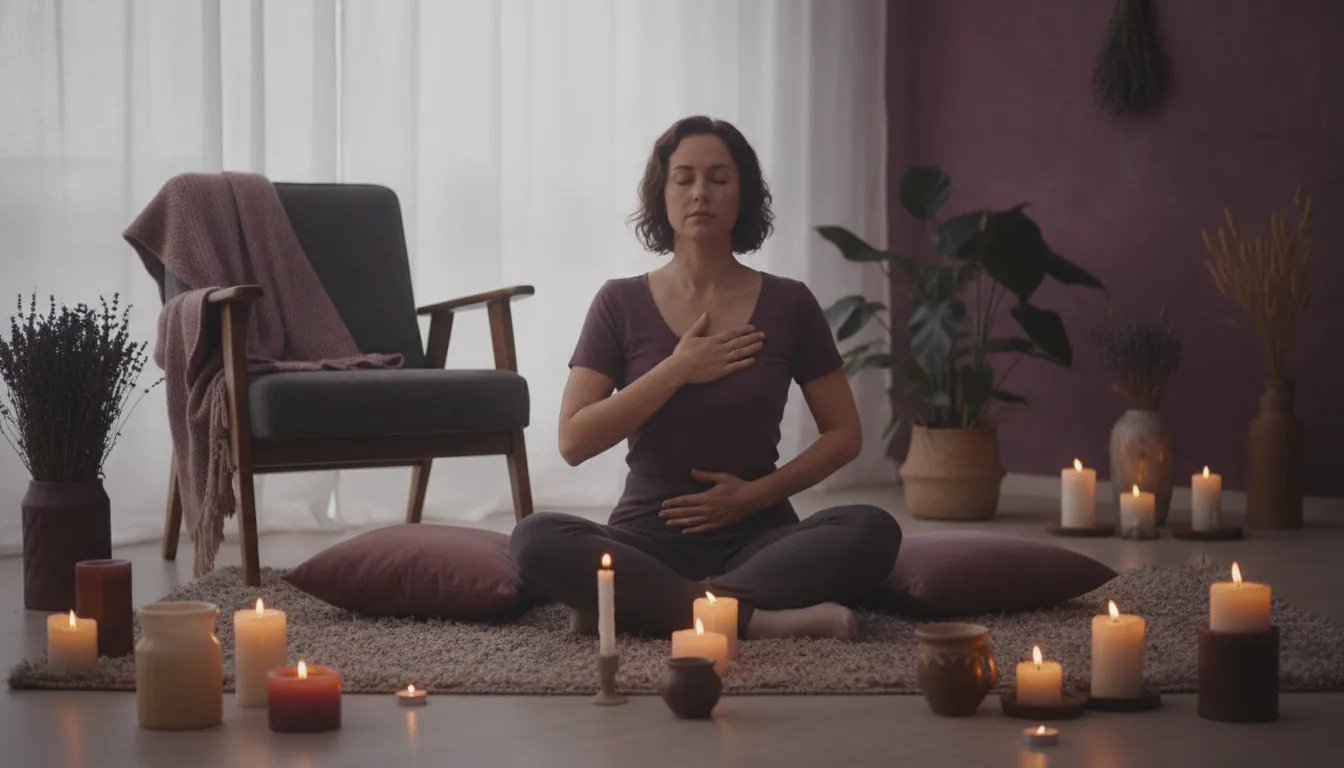
How the Healing Home Method supports somatic meditation for women
The Healing Home Method is a body-led way to find peace. It is not just about sitting still or watching thoughts. Most people think meditation is a mental task. But for many women, the mind is too busy to quiet easily. This method shifts the focus from the head to the body. It uses somatic meditation for women to help you listen to your body in real time. This practice helps you move out of stress and back into ease.
A base for nervous system safety
Many women spend their days in survival mode. You might feel “wired but tired” or always on edge. This often happens because your nervous system does not feel safe. The Healing Home Method builds a base of safety first. Research shows that a sense of safety is a must for deep rest. When you signal to your body that you are safe, your mind can stop looking for threats. This allows your energy to move toward restoration instead of stress.
This approach is different from plain mindfulness. Old tools often ask you to watch your thoughts. But if your body feels unsafe, watching thoughts can feel like a trap. Our somatic meditation for women puts body cues first. We help you find the spots in your body that feel grounded. By focusing on these feelings, you give your system a chance to reset. You learn to work with your body rather than against it.
The Rest and Request approach
A key part of our work is the Rest and Request(TM) practice. This is a signature way to work with the part of your system that helps you relax. It is not about forcing yourself to be calm. Instead, it is a call to your body. You first find a state of rest. Then, you request what your body needs to feel even more supported. This shift helps you move from “performing” calm to truly feeling it. It helps you build a more coherent field of energy within yourself.
This practice helps you break free from the fawn response. This is when women feel they must keep others happy to stay safe. Somatic tools allow you to release this held stress and stop the cycle of being “always on.” Over time, this gently rewires your system. You start to create more room for peace. You move from a place of “doing” to a place of “being.” We call this shift moving from Type A to Type Be.
Owning your healing for good
The goal of this method is to give you tools for life. We believe your healing should belong to you, not someone outside you. The Healing Home Method is meant to be mixed into your daily rhythm. Once you learn to regulate your system, that skill is yours forever. This creates a ripple effect that touches every part of your life. It changes how you show up for yourself and for your family.
For those who want to go deeper, we offer ways to master these tools. Our healing method for therapists and coaches lets you bring this work to others. This is about more than personal growth. It is about cultural repair. By healing your home, you help create a more regulated world. This work is a homecoming to the truth of who you are. It is a call to return to yourself.
Frequently asked questions about somatic meditation for women
What is somatic meditation?
Somatic meditation is a body-led practice that uses sensation, movement, orientation, breath, and felt safety as the entry point. Instead of trying to clear your mind first, you listen to the body and let the nervous system settle at a pace it can trust.
How is somatic meditation different from mindfulness?
Mindfulness often begins with observing thoughts. Somatic meditation begins with body cues. For women who feel wired and exhausted, that difference matters because the body may need signals of safety before the mind can soften.
Can somatic meditation help when I feel too restless to sit still?
Yes, but it should be gentle. If stillness feels like too much, begin with orienting your eyes, feeling your feet, or noticing one neutral sensation. The goal is not to push through restlessness. The goal is to give your nervous system enough safety to stay with you.
How long should a somatic meditation practice be?
A few minutes can be enough, especially at the beginning. Short, consistent practices often feel more supportive than long sessions that your body has to endure. Stop before the practice becomes another performance.
Ready to return to yourself?
If your body has been asking for a different kind of support, the Healing Home Method Somatic Meditation Series offers a gentle place to begin. This work is body-based, dignity-forward, and rooted in the belief that your nervous system is not broken. It has been brave. Through Wendy’s method, you can learn practices that help you build safety, capacity, and a deeper relationship with what your body has always known.
Contact Wendy to learn more about the Healing Home Method Somatic Meditation Series.